Combat air power is changing. For decades, air superiority has been built around increasingly advanced crewed aircraft, high-end sensors, precision weapons and complex support systems. These assets remain critical, but they are also expensive, difficult to replace and increasingly exposed in contested airspace.
The next generation of air capability is unlikely to be defined by crewed aircraft alone. It will increasingly depend on how effectively crewed platforms can operate alongside intelligent, uncrewed systems that extend reach, carry additional sensors or payloads, absorb operational risk and create mass at a lower unit cost.
This is the role of the Autonomous Collaborative Platform, or ACP.
Often described in international defence discussions as a Loyal Wingman, Collaborative Combat Aircraft or uncrewed combat aircraft, an ACP is designed to operate as part of a wider combat air team. Rather than being flown manually like a conventional remotely piloted aircraft, it uses autonomy, artificial intelligence and mission systems to work alongside crewed fighter jets, other uncrewed systems and distributed command networks.
The RAF’s 2024 Autonomous Collaborative Platform Strategy sets out a clear direction for this shift, stating a vision that by 2030 ACPs will be an integral part of the RAF force structure, routinely operating in partnership with crewed platforms to deliver battle-winning military capability.
For defence planners, this represents more than a new aircraft category. It signals a different way of thinking about combat air power.
What is an Autonomous Collaborative Platform?
An Autonomous Collaborative Platform is an uncrewed aircraft designed to operate collaboratively within a wider force package. In practical terms, this may mean flying alongside crewed fighter jets, supporting air defence penetration, acting as a sensor extension, carrying electronic warfare payloads, operating as a decoy, providing communications relay or delivering kinetic effects.
The key difference between an ACP and a traditional drone is the level of autonomy and integration.
A conventional drone is often controlled directly by a remote operator. An ACP is designed to reduce that burden. It can be tasked at mission level, operate with a degree of independence and adapt to changing conditions within defined rules of engagement and safety constraints. Human command remains central, particularly where weapons release or high-consequence decisions are involved, but the platform itself is designed to handle more of the flying, sensing, routing and coordination.
This is why the term collaborative matters. An ACP is not simply an uncrewed aircraft. It is a system designed to work with others.
What does Loyal Wingman mean?
“Loyal Wingman” is the phrase often used to describe an uncrewed aircraft that flies in support of a crewed combat aircraft. The concept is simple: a crewed fighter remains the central command asset, while one or more autonomous platforms fly nearby or ahead, increasing the overall capability of the formation.
A Loyal Wingman may be used to:
- Extend sensor coverage beyond the crewed aircraft.
- Carry additional weapons or mission payloads.
- Probe contested airspace without exposing a pilot.
- Provide electronic warfare or jamming support.
- Act as a decoy to confuse or saturate enemy defences.
- Relay communications across a wider operational area.
- Operate as part of a distributed team of uncrewed aircraft.
The result is a more flexible air package. A single fighter aircraft is no longer limited to the sensors, weapons and survivability systems it carries internally. It can be supported by a network of autonomous platforms that help it see further, act faster and operate with greater resilience.
Internationally, this concept is already influencing future air programmes. Airbus describes uncrewed collaborative combat aircraft as autonomous aerial platforms designed to operate alongside fighter jets, fly in formation, engage threats and react to changing battlefield conditions without constant ground operator input. Boeing similarly positions the MQ-28 Ghost Bat as an autonomous collaborative combat aircraft intended to extend and multiply the capabilities of advanced airpower systems.
Why ACPs matter for future combat air
The operational environment facing modern air forces is becoming more complex. Peer and near-peer adversaries are investing heavily in integrated air defence systems, electronic warfare, long-range sensors, counter-drone systems and precision strike capabilities. In this environment, relying exclusively on small numbers of high-value crewed aircraft creates a difficult risk equation.
Crewed aircraft deliver extraordinary performance, but they are expensive and limited in number. They require pilots, maintenance infrastructure, secure basing and long acquisition cycles. Losing one is both a human and strategic cost.
Autonomous Collaborative Platforms change that calculation.
They allow air forces to distribute capability across a larger number of aircraft. Instead of concentrating sensors, weapons and mission systems on a small number of crewed platforms, ACPs make it possible to create a wider, more flexible and more resilient combat air network.
This does not replace the fighter pilot. It gives the pilot more options.
A crewed aircraft supported by ACPs can send uncrewed systems forward into higher-risk areas, deploy sensors across a wider battlespace, use autonomous platforms to complicate an adversary’s targeting decisions and create operational mass without requiring every aircraft in the package to carry a pilot.
AI-driven autonomy and decision support
Artificial intelligence is central to the ACP concept, but it is important to describe its role accurately.
In this context, AI does not mean removing human judgement from warfare. It means using autonomy to manage tasks that are too fast, too complex or too numerous for a human operator to handle directly in real time.
An ACP may need to maintain formation, avoid terrain, respond to degraded communications, manage fuel, adapt its route, process sensor data, prioritise threats or coordinate with other aircraft. If every action required direct manual control, the workload would quickly become unmanageable.
AI-driven autonomy allows the platform to operate with greater independence while still remaining within the mission parameters set by human commanders.
The RAF strategy recognises that ACP capability will develop through multiple iterations and stages, with continual experimentation determining which capabilities are matured or retained in service. That iterative approach is important because autonomy, mission software and operational doctrine will evolve together. The aircraft, the AI and the way people use them cannot be developed in isolation.
Speed matters: why high-performance ACPs are different
Not all autonomous aircraft need to be fast. Some missions are better suited to long endurance, low speed or loitering behaviour. However, a Loyal Wingman designed to operate alongside modern combat aircraft must be able to match the tempo of the mission.
Speed affects survivability, responsiveness and tactical relevance.
A slow uncrewed aircraft may be useful for surveillance or logistics, but it cannot always keep pace with fast jets or operate credibly in the same threat environment. A high-performance ACP needs the aerodynamic design, propulsion, structural integrity and mission systems required to fly at combat-relevant speeds.
This is why high subsonic and near-supersonic ACP designs are attracting attention. They occupy a different part of the capability spectrum from small tactical drones or slower uncrewed platforms. They are designed to support fighter operations, not simply observe from the edge of the battlespace.
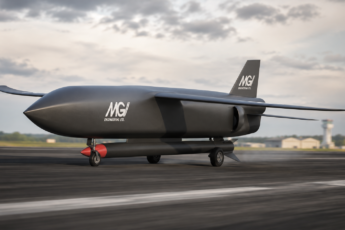
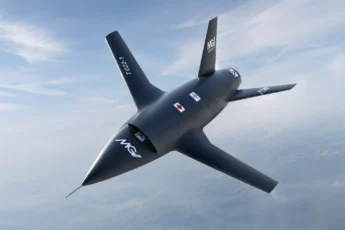
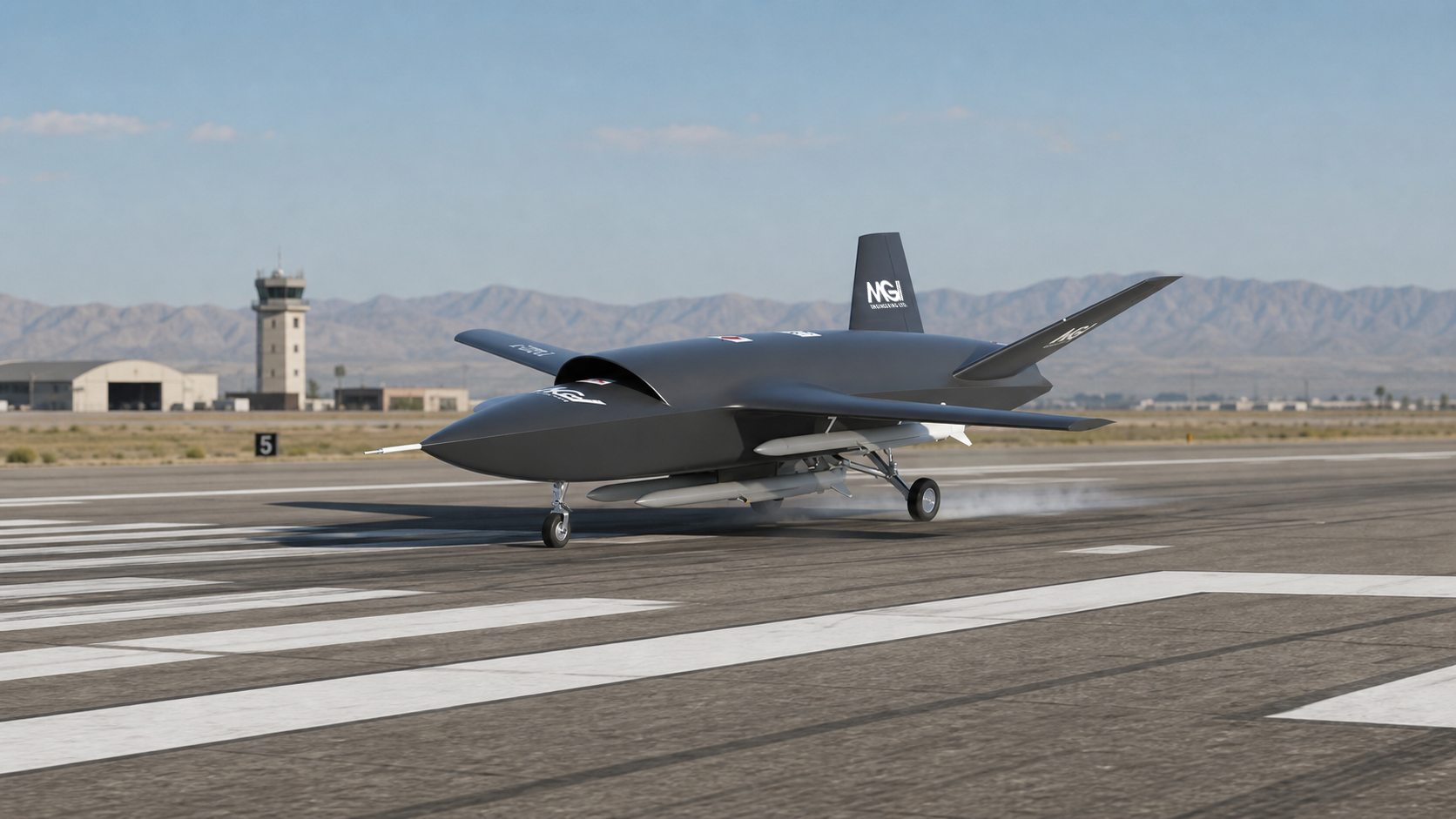
Vortex reflects this direction of travel. It is described as a near-supersonic Autonomous Collaborative Platform, with a stated top speed of Mach 0.85, strategic range, multi-role payload capacity and a design intent centred on manned-unmanned teaming.
Operating in denied and contested environments
Future ACPs must also be designed for conditions where communications are degraded, jammed or denied.
This is one of the major differences between an advanced autonomous combat platform and a conventional remotely controlled drone. In a heavily contested electronic environment, an aircraft that depends on continuous operator input may become vulnerable if the link is interrupted.
An ACP must be able to continue operating safely and usefully when communications are unreliable. That may involve returning to a pre-planned route, continuing a mission within defined parameters, switching behaviour, coordinating with other platforms or preserving itself for later tasking.
Votex published capability description highlights denied-environment resilience, stating that it is designed to operate when communications are jammed or denied, with AI continuing to make decisions without a persistent link to a ground controller.
This does not remove the need for human oversight. It changes the relationship between operator and aircraft. The human sets the intent, mission limits and authority. The platform performs more of the execution.
From single aircraft to collaborative force packages
The real value of ACPs is not just in the aircraft itself. It is in the force package they make possible.
One autonomous aircraft can extend a mission. Multiple autonomous aircraft can change the geometry of the battlespace.
A group of ACPs operating with crewed aircraft can create multiple sensor angles, present more targets to an adversary, carry different payloads, separate risk across several platforms and provide redundancy if one aircraft is lost or degraded.
This is where manned-unmanned teaming becomes strategically significant. The crewed aircraft becomes part of a wider system rather than a single isolated platform. It may direct one ACP as a sensor, another as a decoy, another as an electronic warfare asset and another as a payload carrier.
The effect is not simply additive. It can be disruptive.
For adversaries, a mixed formation of crewed and uncrewed aircraft is harder to classify, harder to prioritise and harder to defeat. For friendly forces, it creates more options and reduces the need to expose pilots to the highest-risk parts of a mission.
The importance of rapid development and sovereign capability
Autonomous Collaborative Platforms are not only an operational challenge. They are also an industrial one.
The speed at which threats evolve means that future ACPs cannot follow the same development rhythm as traditional high-end aircraft programmes. Airframes, mission systems, autonomy software, payloads and operational concepts must be upgraded at the speed of relevance.
The RAF strategy is clear on this point. It identifies the need for an industry and government ecosystem capable of rapid development, fielding and through-life support of innovative ACP capabilities. It also notes that the UK’s ACP, robotics and autonomous systems industrial landscape is still new, and that investment in UK SMEs and companies is needed to grow domestic industrial capacity and innovation.
For the UK, this matters.
Sovereign design and manufacturing capability gives defence customers greater control over development pace, configuration, security, supply chain resilience and through-life upgrades. It also allows platforms to be adapted quickly as operational requirements change.
MGI’s approach is directly relevant here. Drawing on Formula 1-derived engineering methods, rapid prototyping, lightweight structures and iterative manufacturing, MGI is positioned to support defence customers that need autonomous systems developed, tested and refined in compressed timescales.
ACP, CCA and Loyal Wingman: different terms, same direction
The terminology can be confusing.
- The UK often uses Autonomous Collaborative Platform or ACP.
- The United States often uses Collaborative Combat Aircraft or CCA.
- Industry and media often use Loyal Wingman.
These terms are not always identical, and each programme may define its requirements differently. However, they all point towards the same strategic shift: crewed aircraft operating with intelligent uncrewed systems to create a larger, more resilient and more flexible combat air force.
The important question is not which label is used. The important question is what the platform can do.
- Can it operate at the required speed and range?
- Can it integrate with crewed platforms?
- Can it carry useful mission payloads?
- Can it operate when communications are contested?
- Can it be upgraded quickly?
- Can it be produced at a cost that allows meaningful numbers?
- Can it support national defence requirements without creating long-term dependency on overseas supply chains?
These are the questions that will determine which ACPs become operationally relevant.
MGI and the future of Autonomous Collaborative Platforms
MGI’s ACP development sits within this wider shift in combat air thinking.
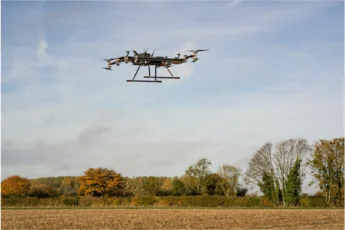
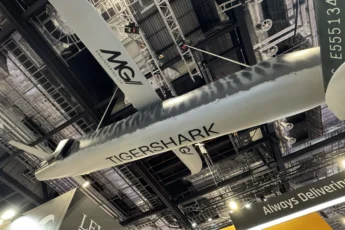
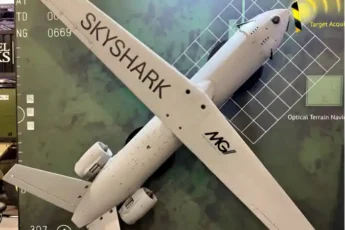
The Leopardshark is described as an ultra-low-cost, medium-range Autonomous Collaborative Platform evolved from MGI’s TigerShark long-range OWE, supporting test and evaluation, autonomy, artificial intelligence and manned-unmanned teaming development.
The Vortex moves into a higher-performance category, combining near-supersonic speed, strategic range, payload flexibility and teaming-focused design.
Together, these platforms reflect the layered nature of future autonomous combat air capability. Not every ACP will perform the same role. Some will be lower-cost development and tactical platforms. Others will be larger, faster and more capable aircraft designed to operate alongside crewed fighter jets at combat range.
The future force mix is likely to require both.
Conclusion: Loyal Wingman capability is moving from concept to requirement
Autonomous Collaborative Platforms are no longer a distant concept. They are becoming a practical requirement for modern air forces seeking to increase combat mass, reduce pilot exposure, extend reach and operate more effectively in contested environments.
The Loyal Wingman idea captures the imagination because it is easy to understand: an intelligent uncrewed aircraft flying alongside a crewed fighter jet. But the real significance goes deeper.
ACP capability is about reshaping the force structure. It is about distributing risk, accelerating innovation, enabling new tactics and creating scalable air power that can be adapted as threats change.
For the UK, the opportunity is clear. By combining sovereign engineering, rapid development, AI-enabled autonomy and high-performance aircraft design, Autonomous Collaborative Platforms can become a central part of future combat air capability.
MGI is helping to move that future from concept to operational reality.
Explore MGI’s Autonomous Collaborative Platform capability, including the near-supersonic Votex and the ultra-low-cost Leopardshark ACP development platform.
FAQs
What is an Autonomous Collaborative Platform?
An Autonomous Collaborative Platform, or ACP, is an uncrewed aircraft designed to operate as part of a wider combat air team. It uses autonomy, AI and mission systems to support crewed aircraft, other uncrewed platforms and distributed command networks.
Is an ACP the same as a Loyal Wingman?
A Loyal Wingman is one type of Autonomous Collaborative Platform. The term usually describes an uncrewed aircraft that flies alongside or in support of a crewed fighter jet, extending its sensor reach, payload capacity, survivability and tactical options.
How do ACPs support fighter jets?
ACPs can support fighter jets by carrying sensors, weapons, electronic warfare systems or decoy payloads. They can fly ahead of crewed aircraft, operate in higher-risk areas, relay information and increase the overall mass and flexibility of the combat air package.
Why is AI important in Loyal Wingman aircraft?
AI allows Loyal Wingman aircraft to manage complex tasks such as navigation, formation keeping, route adaptation, sensor processing and mission execution without requiring constant manual control. Human commanders remain responsible for mission intent and high-consequence decisions.
Why does speed matter for an Autonomous Collaborative Platform?
Speed matters because an ACP supporting fast jets must be able to keep pace with combat air operations. High subsonic or near-supersonic aircraft can operate in a different mission environment from slower tactical drones, making them more relevant for fighter teaming roles.
What is the difference between ACP, CCA and Loyal Wingman?
ACP stands for Autonomous Collaborative Platform and is commonly used in the UK. CCA stands for Collaborative Combat Aircraft and is widely used in the United States. Loyal Wingman is a more general term for an uncrewed aircraft designed to support crewed combat aircraft.