
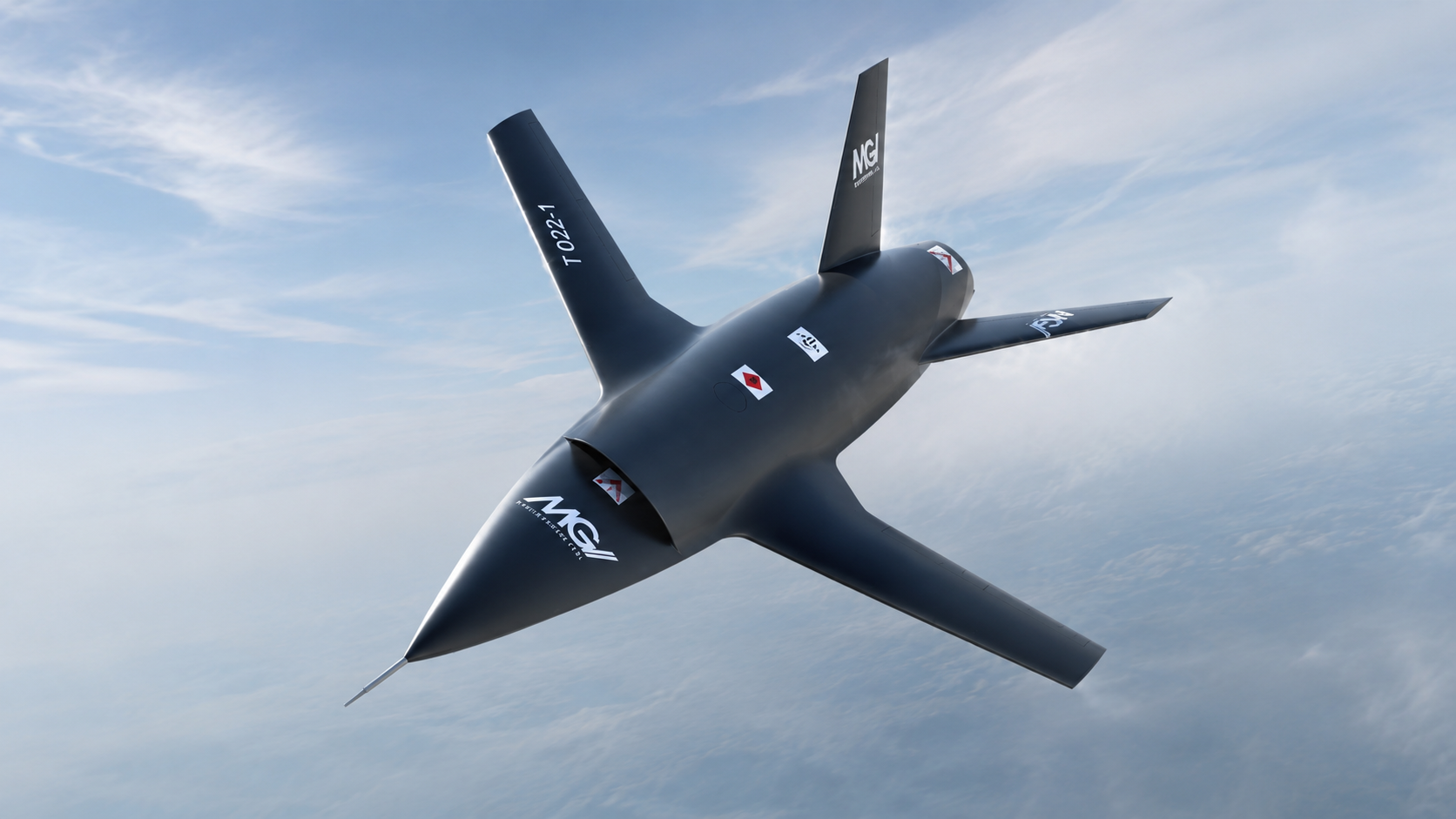
LeopardShark

Near-supersonic speed
Mach 0.85 top speed — fast jet performance without a pilot on board.

Strategic range
4,000+ km combat radius — reach targets well beyond the frontline.
Teaming by design
Built to fly alongside crewed aircraft, sharing data and executing coordinated tasks autonomously.

Multi-role payload
1,000 kg across four stations — weapons, sensors, electronic warfare, or mixed fit.
Collaborative combat, redefined
LeopardShark is an Autonomous Collaborative Platform (ACP) — an aircraft that operates without a pilot, flies using artificial intelligence, and is designed from the outset to work as part of a coordinated team with crewed jets. Where previous autonomous platforms forced a choice between range, speed, or payload, LeopardShark delivers all three.
At 3,500 kg maximum take-off weight with a combat radius exceeding 4,000 kilometres, LeopardShark operates in a performance envelope previously reserved for fast jets. At a unit cost of £3–6 million — a fraction of any crewed equivalent — it becomes possible for the first time to field these capabilities at genuine scale.
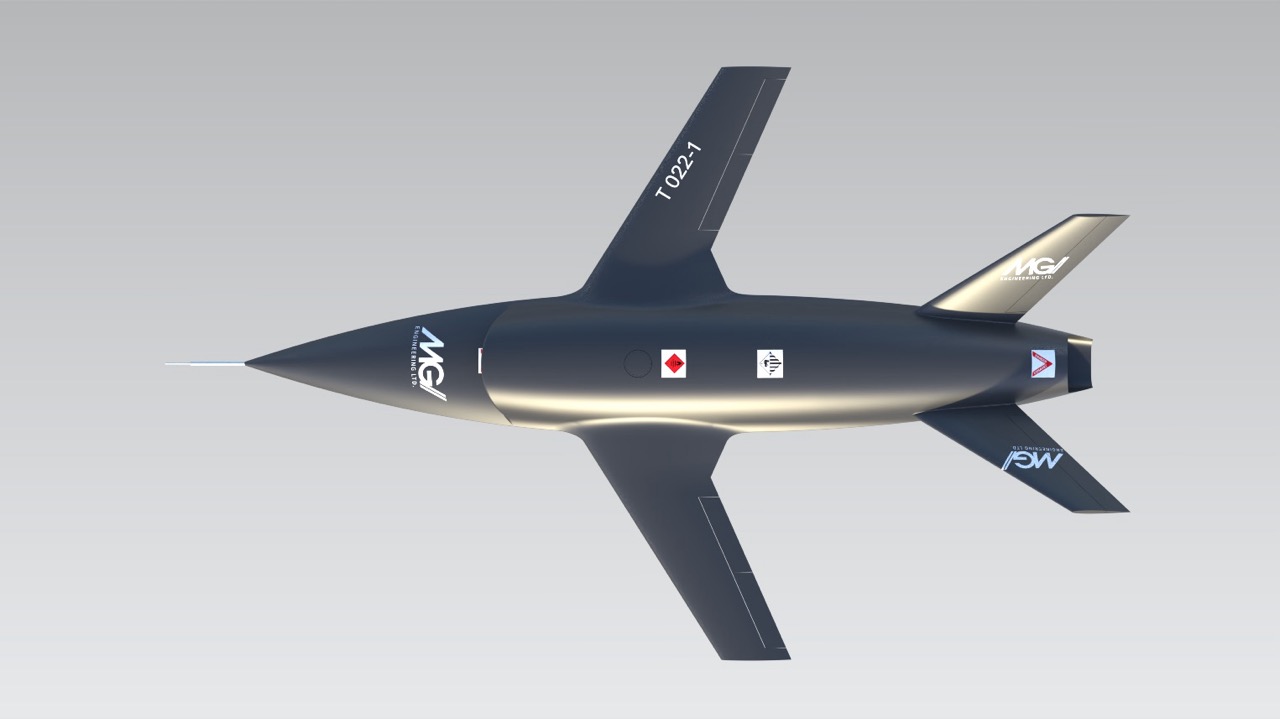
Performance at a glance
>4,000 km — Strategic reach
Farther than any peer-class autonomous platform at this price point.
Mach 0.85 — Near-supersonic
1,050+ km/h — comparable to frontline fast jets.
1,000 kg total payload — Flexible fit
400 kg internal bay plus 600 kg across four external stations.
£3–6M per unit — Affordable at scale
Configuration-dependent — a fraction of any crewed equivalent.
Capability
Autonomous Collaborative Platform (ACP)
LeopardShark operates independently using AI — planning, adapting, and executing missions without a ground operator in the loop for every decision. Aligned with the UK MoD’s ACP programme framework.
Manned-unmanned teaming (MUM-T)
A single crewed aircraft — Typhoon, F-35 or equivalent — can direct multiple LeopardSharks simultaneously. They share sensor data, respond to changing mission requirements, and execute coordinated tasks autonomously.
Denied-environment resilience
LeopardShark is designed to operate when communications are jammed or denied — the AI continues to make intelligent decisions without a persistent link to a ground controller.
Multi-role mission fit
Four payload stations — internal and external — support kinetic strike, ISR (intelligence, surveillance, and reconnaissance), electronic warfare, and decoy configurations. Reconfigured between missions.
Full-envelope manoeuvrability
-2g to +7g flight envelope across an operating altitude range from 20 m to 12,000 m. Credible not only as a long-range platform, but in contested airspace where agility matters.
Sovereign UK manufacture
Designed and built in the UK by MGI Engineering — applying Formula 1-derived rapid prototyping and lightweight composite expertise to frontline defence requirements.
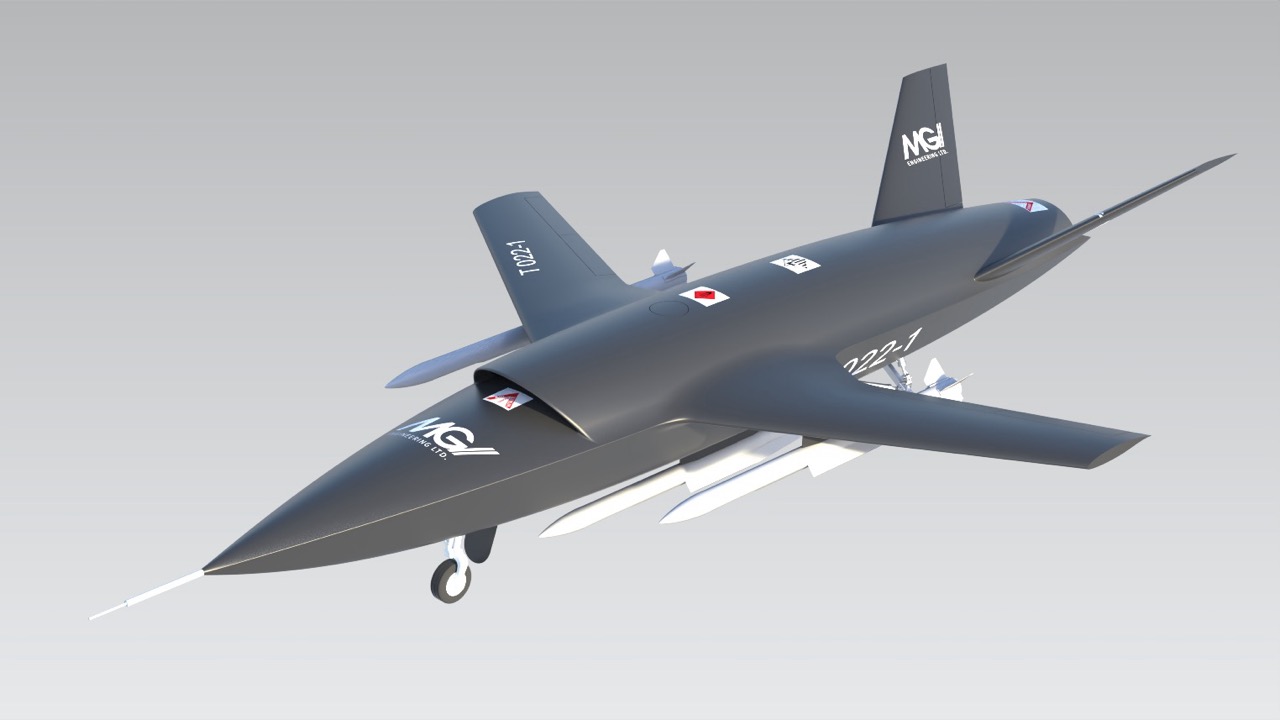
Specification
Length
Length: 11.0m
Wingspan: 7.6m
Empty Weight
1025kg
Max Take Off Weight (MTOW)
3500kg
Powerplant
P&W CW 530 turbofan (or equivalent), 12–16 kN thrust
Max speed
>1,050 km/h — Mach 0.85
Cruise speed
875 km/h — Mach 0.71
Range
>4,000 km
Operating altitude
Minimum: <20 m
Maximum: 12,000 m
Maximum: 12,000 m
Manoeuvrability
-2g to +7g
Total payload capacity
1000kg
Costs
£3-6M based on avionics/mission requirements