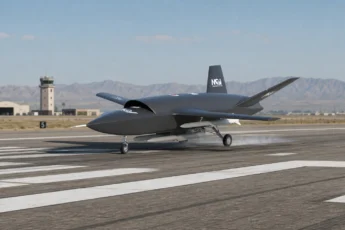
Modern defence procurement is being reshaped by a simple but urgent question: how can armed forces generate meaningful combat mass without relying solely on small numbers of highly expensive, difficult-to-replace platforms?
For decades, air power has tended to favour increasingly sophisticated crewed aircraft, high-end missiles and complex systems that deliver exceptional performance but come with high acquisition costs, long development cycles and limited stock depth. In a short campaign, that model can be effective. In a prolonged, high-intensity conflict, it creates a different challenge: what happens when valuable platforms are lost, munitions are depleted, or operational tempo demands more systems than traditional procurement can provide?
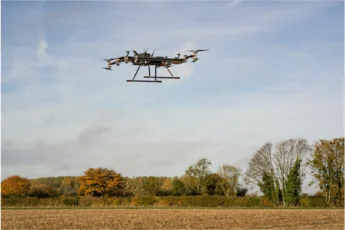
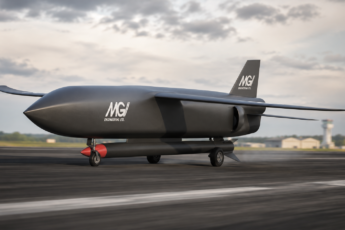
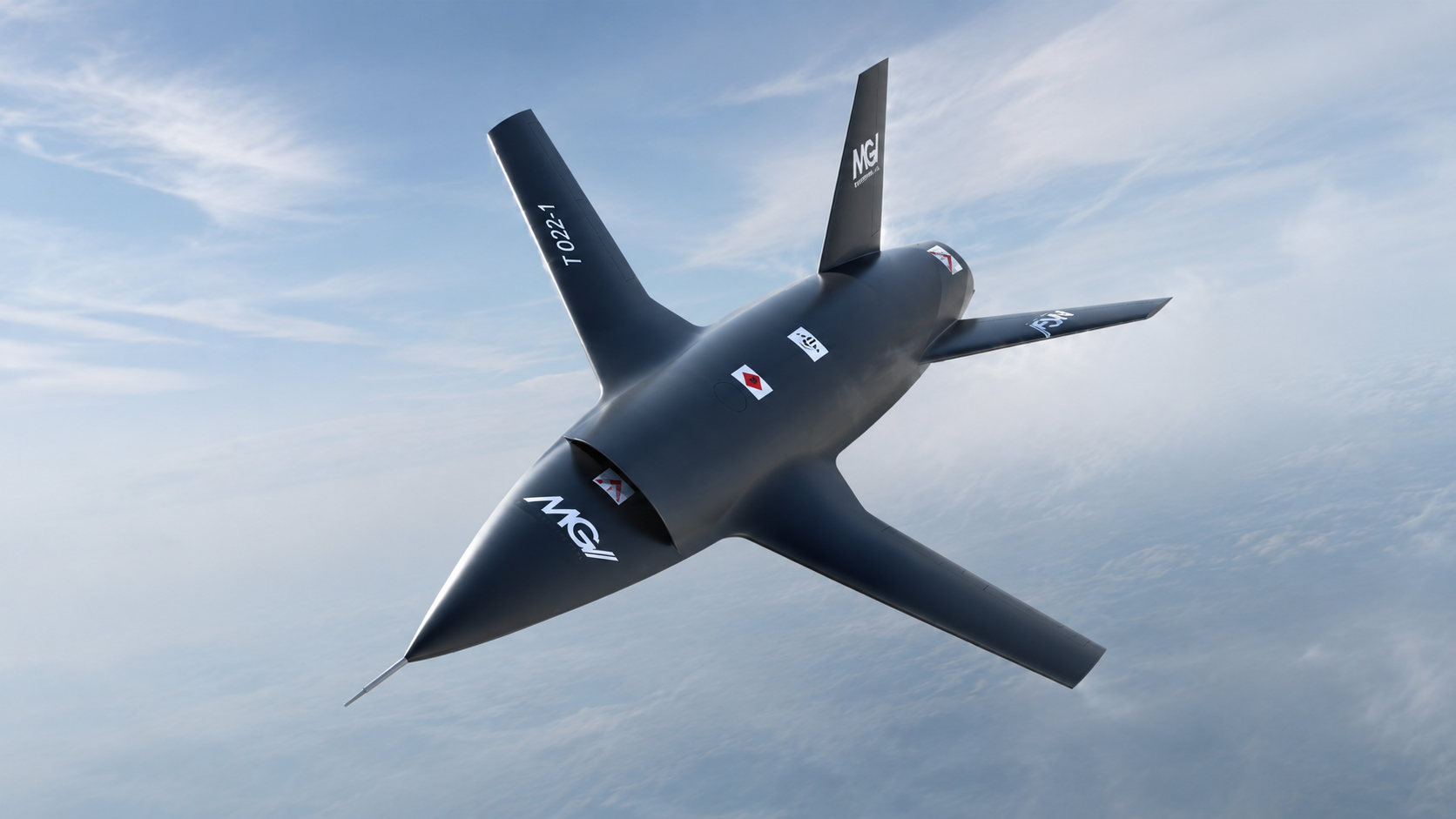
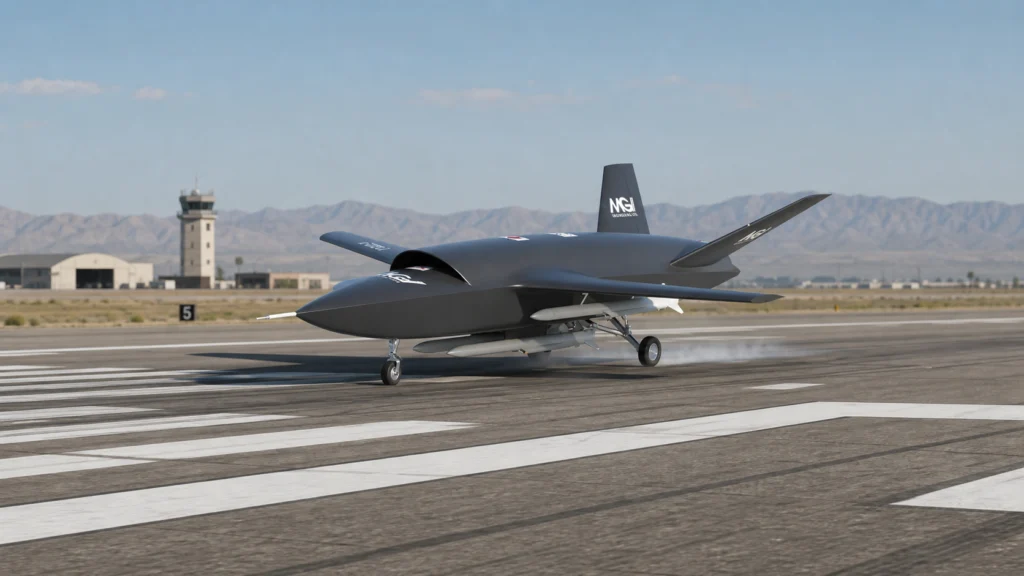
This is where the concept of the Autonomous Collaborative Platform, or ACP, becomes increasingly important. Systems such as the Vortex point towards a different model of capability: autonomous, collaborative, high-performance aircraft designed to operate alongside other assets, deliver useful payloads, extend operational reach and provide combat mass at a cost point that allows meaningful scale.
With a proposed unit cost of approximately £3–6 million, depending on avionics and mission requirements, Vortex sits in a strategically important space. It is not a disposable hobby drone, but nor is it an exquisite crewed combat aircraft. It is designed to provide a serious, mission-capable autonomous platform that can be procured, deployed and replaced at pace.
What is an Autonomous Collaborative Platform?
An Autonomous Collaborative Platform is an uncrewed system designed to work as part of a wider force package rather than as a standalone asset. In practice, this may mean operating alongside crewed aircraft, other uncrewed systems, maritime platforms, ground-based command systems or distributed sensors.
The key word is collaborative. These platforms are not simply remote-controlled aircraft. They are designed to support teaming operations, distributed mission execution and autonomous or semi-autonomous behaviours that reduce the burden on human operators. Depending on the mission, an ACP may be used for sensing, decoy operations, electronic warfare support, communications relay, payload delivery or strike-related roles.
For defence planners, the attraction is clear. ACPs can increase reach, complicate an adversary’s decision-making and add operational mass without placing pilots directly in harm’s way. They also create more flexible force structures, where high-value crewed assets can be supported by lower-cost autonomous systems capable of taking on riskier or more numerous tasks.
Why attritable scale is becoming a procurement priority
The term “attritable” is increasingly used in defence to describe systems that are capable enough to be operationally valuable, but affordable enough to be risked and replaced. This does not mean they are cheaply made or casually expendable. It means they are designed around a different cost-performance balance.
Traditional high-end platforms are often too expensive, too scarce and too slow to replace to be used in large numbers. That creates operational caution. Commanders may be reluctant to expose them to high-risk missions, even when the mission requirement is urgent.
Attritable autonomous systems change that calculation. If a platform can deliver meaningful capability at a lower unit cost, it can be fielded in greater numbers, used more boldly and replaced more quickly. This matters in contested environments where attrition is not a theoretical risk but an expected feature of operations.
Vortex is designed to address that requirement for scale. With a proposed cost range of £3–6 million, it offers the potential to build deployable mass at a level that sits between small tactical drones and highly expensive crewed aircraft or advanced missile systems. That middle ground is becoming one of the most important spaces in modern defence.
The cost-performance balance: why £3–6 million matters
In defence terms, cost is not just a procurement issue. It is an operational factor.
A platform that costs tens or hundreds of millions of pounds may offer exceptional performance, but it also imposes constraints. It is harder to buy in quantity, harder to replace, and harder to risk in heavily defended environments. A lower-cost system, by contrast, can create more options.
At an estimated £3–6 million depending on mission fit, avionics and payload requirements, Vortex is positioned to provide serious capability without falling into the category of an exquisite asset. That means it can potentially support larger fleet numbers, faster replenishment cycles and more distributed deployment.
This is particularly important for collaborative operations. A single autonomous aircraft may be useful, but a force of autonomous platforms creates a very different effect. Multiple systems can operate across wider areas, present multiple dilemmas to an adversary, support saturation, provide redundancy and enable more resilient mission planning.
The value of an ACP is therefore not only in the individual aircraft. It is in the number of aircraft that can be fielded, the pace at which they can be produced, and the flexibility with which they can be configured for changing operational requirements.
Vortex and the role of collaborative autonomy
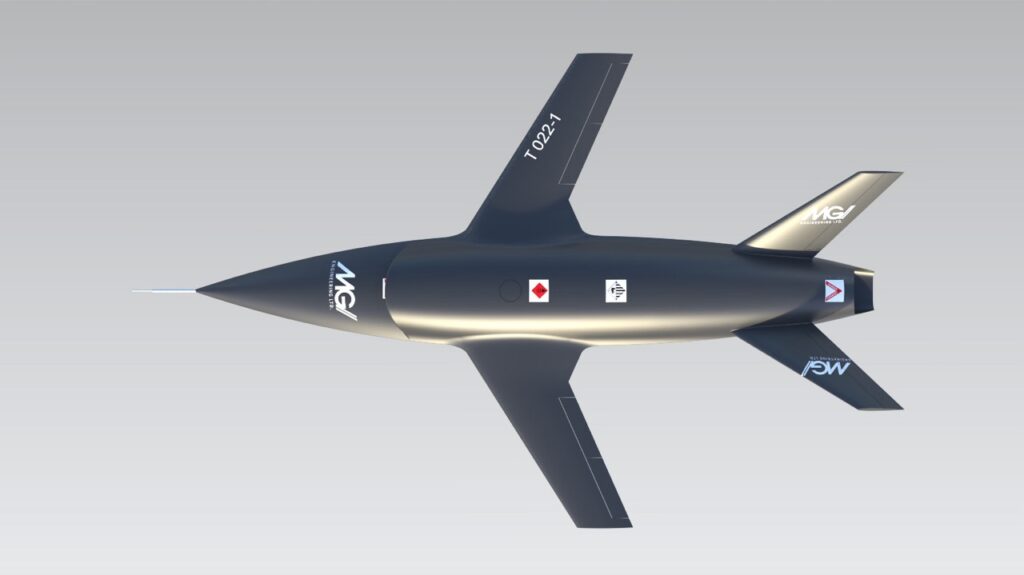
The Vortex has been developed as an Autonomous Collaborative Platform using autonomy and artificial intelligence to support tactical UAS capability and manned-unmanned teaming operations.
That collaborative role is central to its relevance. Future air operations are unlikely to be dominated by single platforms acting independently. Instead, capability will increasingly come from networks of systems: crewed aircraft, autonomous platforms, sensors, effectors, command nodes and electronic warfare assets working together.
In this context, Vortex can be understood as part of a wider move towards distributed air power. Rather than relying on a small number of highly valuable platforms to perform every task, defence organisations can use autonomous collaborative systems to extend the reach and resilience of the force.
This may include missions where an uncrewed platform is better suited to the risk profile, endurance requirement or desired cost-exchange ratio. It may also include scenarios where multiple autonomous platforms are used to support a crewed asset, helping to increase survivability, sensing reach or tactical flexibility.
Designed for denied and contested environments
Modern autonomous systems must be designed for environments where communications, navigation and electronic systems may be degraded or attacked. Denied and contested environments are now central to defence planning because potential adversaries are investing heavily in electronic warfare, air defence, cyber disruption and counter-UAS capabilities.
For ACPs, this creates a clear requirement: they must be useful even when the operating environment is complex, degraded or rapidly changing.
Vortex role as a collaborative autonomous system aligns with this requirement. The platform is part of a broader shift towards systems that can operate with greater independence, support mission continuity and reduce reliance on vulnerable assumptions such as constant connectivity or permissive airspace.
In practical terms, this means defence clients need platforms that can be adapted to different mission sets, integrated with relevant payloads and developed iteratively as threats evolve. This is where MGI’s engineering approach is especially relevant.
Rapid development and replacement at pace
One of the most important lessons from recent conflicts is that operational circumstances change quickly. Systems that are effective at the start of a campaign may need rapid modification as adversaries adapt. Procurement models built around long development cycles can struggle to keep pace with that reality.
MGI’s Formula 1-derived methodology is highly relevant here. Motorsport engineering is built around rapid design, testing, iteration and manufacture under intense time pressure. Applying that approach to defence means autonomous systems can be developed and adapted in weeks rather than years.
For Vortex, this matters for two reasons.
First, the platform can support the need for rapid capability development. As mission requirements change, the system can be adapted around payload, avionics, autonomy and operational use case.
Second, the proposed cost point supports replacement at pace. Attritable scale only works if systems can be manufactured, delivered and replenished quickly enough to sustain operational tempo. A platform that is affordable but slow to produce does not solve the problem. Equally, a platform that is fast to build but lacks meaningful capability will not meet defence requirements.
The challenge is to combine capability, cost and manufacturing speed. Vortex is positioned around that balance.
Building mass without sacrificing capability
Attritable does not mean low capability. This is a common misunderstanding.
The objective is not to replace every high-end platform with a cheaper alternative. Instead, attritable autonomous platforms add a new layer to the force mix. They allow commanders to use expensive crewed systems where they are most valuable, while assigning other missions to autonomous platforms that are more affordable, more numerous and more replaceable.
Vortex specification reflects this ambition. With long range, high subsonic performance, significant payload potential and collaborative autonomy, it is designed to offer credible capability at a cost level that supports scale.
This creates a more balanced force structure. High-end crewed aircraft, missiles and sensors remain important, but they are no longer required to carry every operational burden. Autonomous collaborative platforms can help increase mass, distribute risk and improve resilience across the battlespace.
A UK-developed response to a changing defence market
Defence clients are increasingly seeking sovereign or allied industrial capacity that can respond quickly to emerging operational needs. This is not simply about buying a platform. It is about having access to an engineering and manufacturing partner capable of adapting systems as lessons are learned.
The Vortex programme reflects this need for fast, iterative development. It combines MGI’s advanced engineering expertise with a defence-specific focus on autonomous systems for contested environments.
For UK and allied customers, this approach offers an alternative to long-cycle procurement. Rather than waiting years for a perfect system, defence organisations can work with a development partner that is able to prototype, test, refine and manufacture at speed.
That ability to iterate is becoming as important as the platform itself. In modern conflict, the winning advantage may come not only from the system deployed today, but from how quickly that system can be improved for tomorrow’s threat environment.
Why Vortex supports the future of collaborative air power
The future of air power will not be defined by a simple choice between crewed and uncrewed systems. It will be defined by how effectively they work together.
Autonomous Collaborative Platforms such as Vortex are designed to support that transition. They offer a route to greater mass, increased operational flexibility and reduced risk to personnel, while providing a cost-performance balance that makes scale more achievable.
At a proposed £3–6 million per aircraft, Vortex provides a compelling answer to one of modern defence’s most pressing challenges: how to build a force that is capable, numerous, adaptable and replaceable.
In contested environments, survivability is not only about protecting individual platforms. It is also about sustaining the mission when losses occur, adapting quickly when threats evolve and maintaining enough operational mass to keep pressure on an adversary.
Vortex is designed for that reality. It represents a move away from fragile scarcity and towards scalable, collaborative autonomous capability — the kind of capability defence organisations will need as the battlespace becomes faster, more contested and more demanding.
FAQ
What is the MGI Vortex ACP?
The Vortex is an Autonomous Collaborative Platform designed to support tactical uncrewed air system operations, collaborative autonomy and manned-unmanned teaming.
What is an Autonomous Collaborative Platform?
An Autonomous Collaborative Platform is an uncrewed system designed to operate as part of a wider force package, working with crewed aircraft, other autonomous systems, sensors or command networks to support mission objectives.
What does attritable mean in defence?
Attritable refers to systems that are capable enough to deliver operational value but affordable enough to be deployed in numbers, risked in contested environments and replaced when lost.
Why is Vortex proposed cost important?
With a proposed cost of approximately £3–6 million depending on avionics and mission requirements, Vortex is positioned to provide meaningful autonomous capability at a cost point that supports scale and replacement at pace.
How does Vortex support manned-unmanned teaming?
Vortex is designed as a collaborative autonomous platform, meaning it can support future force structures where crewed and uncrewed systems operate together to increase reach, resilience and tactical flexibility.
Why are autonomous collaborative systems important in contested environments?
Contested environments place pressure on communications, navigation, air defence and electronic systems. Autonomous collaborative platforms can help distribute risk, increase operational mass and support mission continuity in degraded or high-threat conditions.