Modern military operations depend on logistics. Ammunition, batteries, medical supplies, food, water, spare parts and specialist equipment all need to reach personnel operating at the tactical edge. Yet in a denied or highly contested environment, the final stages of that supply chain can also be among the most dangerous.
Traditional resupply may expose personnel, vehicles or crewed aircraft to surveillance, indirect fire, air defence systems and electronic warfare. Autonomous and uncrewed aerial systems offer another option: moving critical supplies rapidly to forward positions while reducing the number of people and high-value platforms that need to enter the most dangerous areas.
For defence organisations, tactical drone resupply is therefore about more than replacing one form of transport with another. It is about creating a more distributed, responsive and resilient logistics network.
What Is Tactical Drone Resupply?
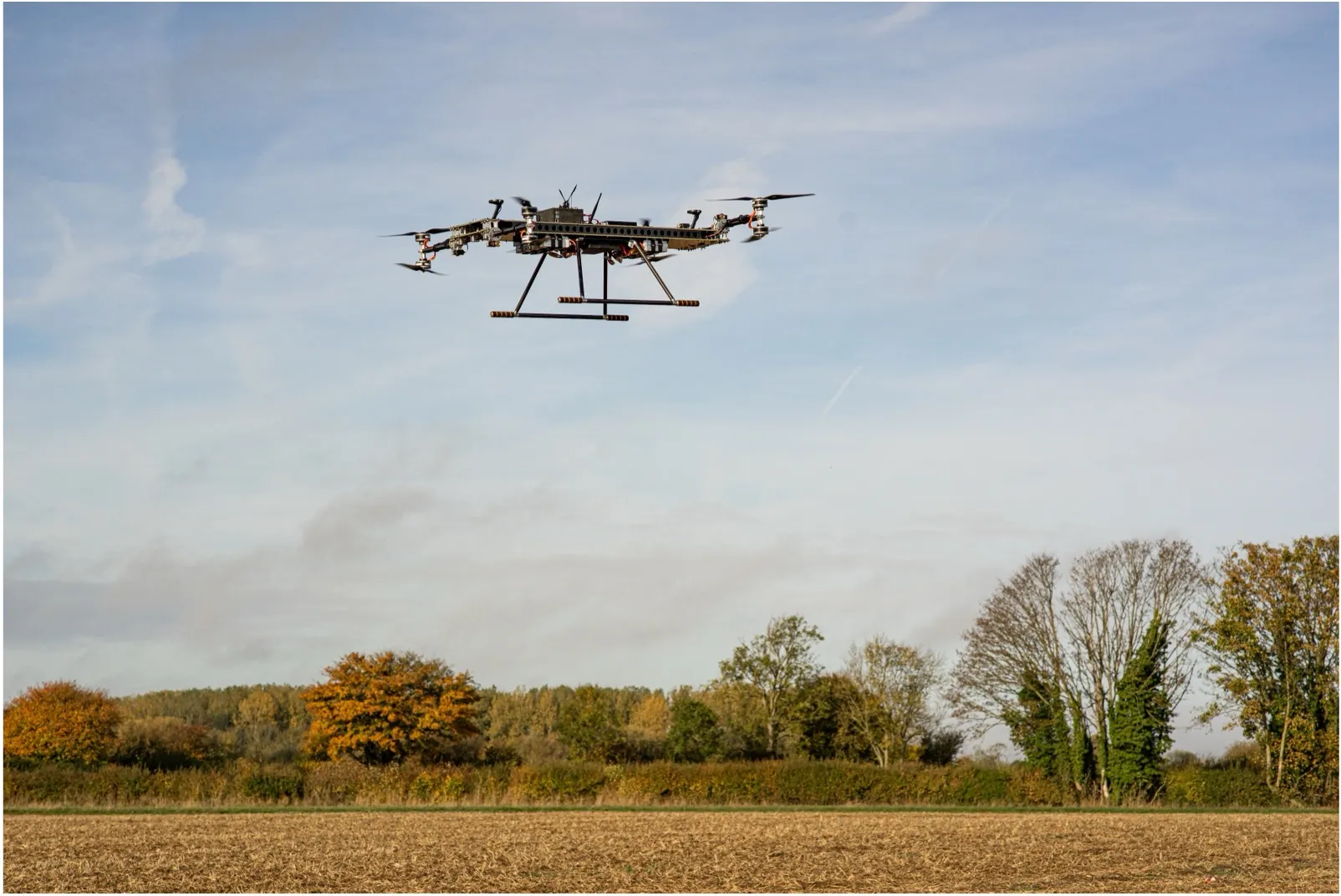
Tactical drone resupply is the use of uncrewed aerial vehicles (UAVs) to transport equipment and supplies directly to military personnel, forward positions or other operational locations.
Rather than relying solely on conventional logistics vehicles or crewed aviation, UAVs can provide an additional layer within the supply chain, particularly for the critical final stage between a logistics hub and the people who need the supplies.
Depending on the platform and mission, payloads could include:
- ammunition and mission-critical equipment;
- medical supplies;
- batteries and power systems;
- communications equipment;
- replacement components and spares;
- food and water; and
- other relatively compact, time-sensitive supplies.
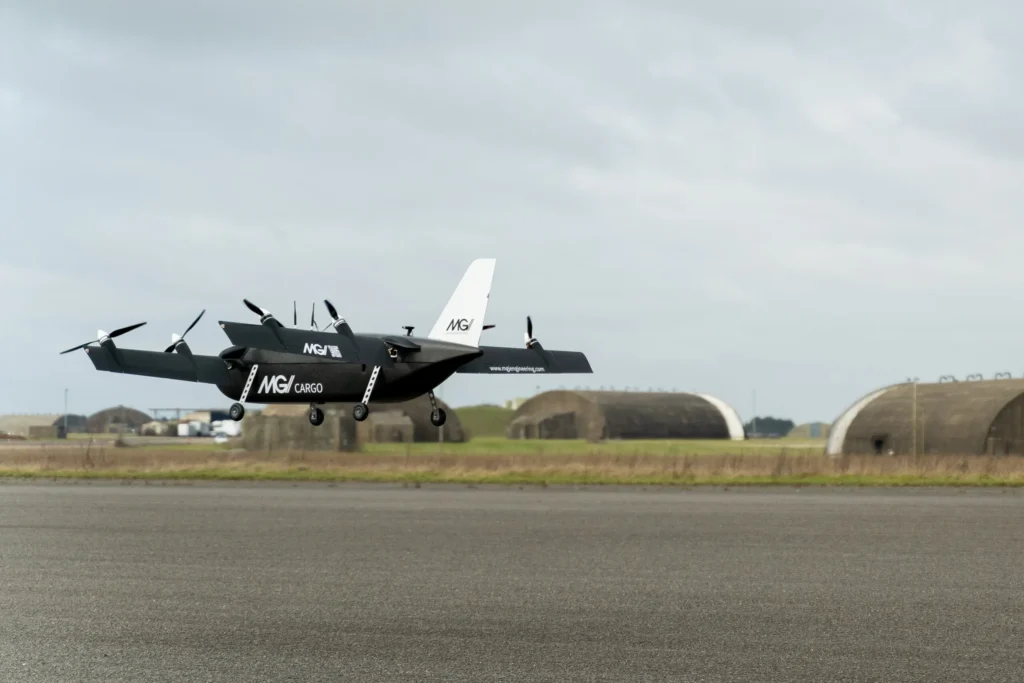
This doesn’t mean drones replace conventional military logistics. Trucks, ships and crewed aircraft will continue to move substantial volumes of materiel. Instead, autonomous UAVs can complement those systems by providing flexible final-lift delivery where conventional resupply becomes difficult, slow or unnecessarily hazardous.
Why Is Resupply More Difficult in a Contested Environment?
Forces operating in a permissive environment can rely upon relatively predictable supply routes. That assumption changes dramatically when an adversary can observe, disrupt or attack the logistics network.
Road movements may be monitored by UAVs and other sensors. Logistics hubs can become targets. Helicopters and transport aircraft may face increasingly sophisticated air defences. Communications can be disrupted and satellite navigation signals degraded or denied.
The challenge becomes particularly acute during the final part of the journey.
Moving a relatively small but urgently needed payload to a forward unit could potentially require a vehicle and personnel to travel through a dangerous area or a much more valuable aircraft to undertake the mission.
Autonomous UAVs provide an opportunity to change that equation.
A comparatively low-cost uncrewed platform can potentially carry the payload instead, allowing the logistics system to become more distributed and reducing unnecessary exposure of personnel.
How Can Drones Enable Battlefield Logistics?
The principal advantage of UAV resupply is responsiveness.
Instead of waiting for supplies to be consolidated into a larger logistics movement, autonomous aircraft can potentially deliver individual loads according to operational demand.
A forward unit might urgently require batteries, medical equipment or a replacement component. An appropriate UAV could be tasked to move that payload directly from a distribution point to the required location.
This creates the potential for a more demand-driven logistics model.
Multiple autonomous platforms can also operate as part of a distributed network rather than relying upon a small number of high-value assets. If requirements change, individual aircraft can be retasked and routes adapted.
This is particularly relevant to rapidly changing operations where the location and requirements of forces may evolve faster than a traditional logistics plan.
Reducing Risk to Personnel
One of the clearest advantages of uncrewed tactical resupply is the ability to separate the movement of supplies from the movement of people.
Every time a crewed vehicle enters a contested area, personnel are exposed to risk. The same applies to crewed aviation operating close to hostile forces.
Not every logistics mission requires that exposure.
If the requirement is simply to move a suitable payload from one location to another, an autonomous platform can potentially perform the task without placing a driver, aircrew or logistics team on board.
This does not remove risk from the supply chain, and UAVs themselves may be lost. But it changes the consequences of that loss.
That distinction becomes increasingly important where autonomous platforms can be manufactured at a sufficiently low unit cost and deployed at scale.
Operating When GPS and Communications Are Disrupted
A major challenge for any autonomous logistics system is that contested environments cannot be assumed to provide reliable communications or satellite navigation.
An aircraft that depends upon an uninterrupted data link to a remote operator may become ineffective when that connection is jammed or disrupted. Similarly, reliance upon GPS alone creates vulnerabilities where satellite navigation signals are degraded, spoofed or denied.
For this reason, useful military autonomy must extend beyond remotely piloting an aircraft.
Platforms intended for denied environments need to be designed around the possibility of communications disruption and should be capable of maintaining an appropriate level of mission functionality when external services become unreliable.
The objective is not simply an uncrewed aircraft. It is a resilient autonomous system designed from the outset for the environment in which it will operate.
From Centralised Logistics to Distributed Resupply
Autonomous platforms also offer an opportunity to rethink the architecture of the military supply chain.
Traditional logistics inevitably creates concentrations: depots, distribution centres, vehicle convoys and established routes. In an increasingly transparent battlespace, concentrations and predictable movements can create vulnerabilities.
A distributed autonomous logistics network could operate differently.
Supplies could be divided between multiple locations and transported using multiple uncrewed platforms. Instead of one large movement, commanders could have access to a series of smaller, more responsive deliveries.
The concept has parallels with the wider shift towards distributed autonomous systems in defence: more platforms, lower unit cost and less dependence upon a small number of highly valuable assets.
Importantly, this is not necessarily an either/or choice. Autonomous delivery can become another layer within an existing logistics network, connecting conventional transport with the tactical edge.
UAVs as the Final Link in an Autonomous Supply Chain
Tactical UAV resupply becomes particularly interesting when aerial platforms are considered as part of a wider autonomous logistics system.
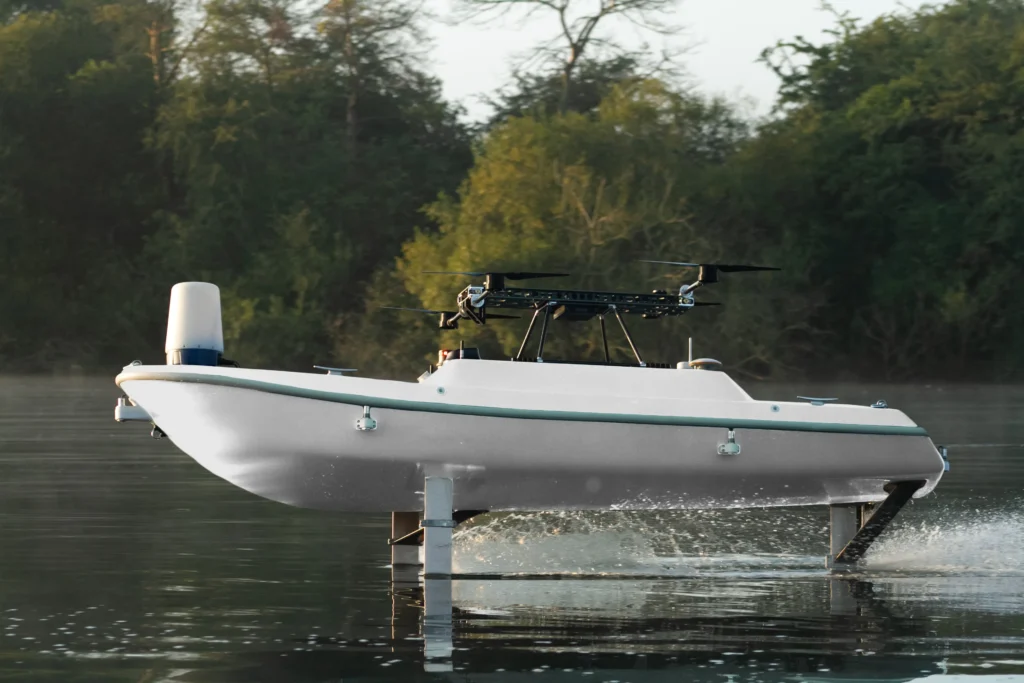
Supplies may initially travel considerable distances by ship, autonomous surface vessel, conventional vehicle or other transport. UAVs can then provide the final connection between that supply network and dispersed units ashore or in forward positions.
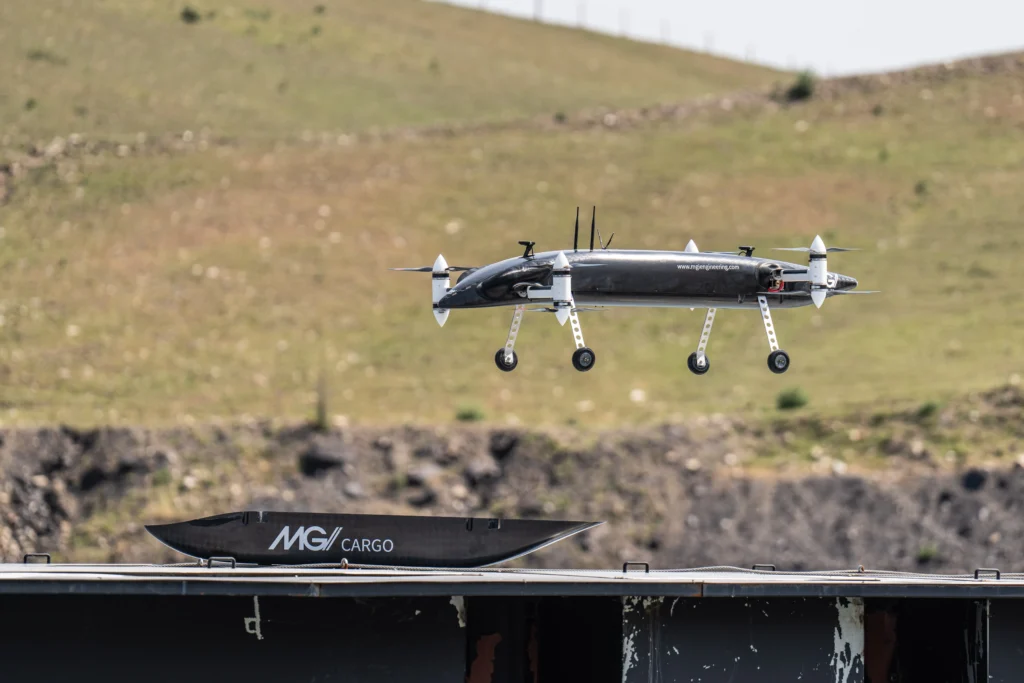
MGI Defence has already explored this broader concept through its autonomous maritime and aerial platforms.
For example, an autonomous surface platform can move supplies over extended distances before a UAV undertakes the final delivery stage. Such an approach can reduce reliance on crewed platforms while extending the reach of an autonomous logistics network into areas where conventional access is increasingly difficult.
The real opportunity therefore lies not simply in developing a “delivery drone”, but in creating autonomous platforms capable of operating together as elements within a resilient end-to-end supply chain.
Why Payload, Range and Cost Need to Be Considered Together
There is no single ideal military resupply drone.
Different missions require different combinations of payload, range, speed, endurance, signature and launch or recovery characteristics.
A UAV carrying urgent medical supplies over a relatively short distance has different requirements from one transporting equipment to a remote forward position.
Cost is equally important.
If an autonomous logistics system is intended to operate in a genuinely contested environment, the possibility of platform losses has to be considered from the beginning. Making every aircraft increasingly sophisticated and expensive can undermine one of the fundamental benefits of uncrewed systems.
The engineering challenge is therefore to provide sufficient capability for the mission without adding unnecessary complexity and cost.
That requires a clear understanding of the operational requirement before the platform is designed.
Rapid Development Matters
The requirements for autonomous systems are evolving exceptionally quickly.
Operational experience can expose new vulnerabilities, new payload requirements or different approaches to electronic warfare within months or even weeks. A UAV designed around assumptions made several years previously may therefore reach service in an environment substantially different from the one for which it was originally conceived.
MGI’s engineering approach originates in Formula 1, where rapid development, lightweight engineering and continuous iteration are fundamental to performance.
Applied to defence, the same methodology enables autonomous platforms to be designed, prototyped, tested and refined on dramatically compressed timescales.
Instead of treating a UAV as a fixed design that remains largely unchanged throughout a lengthy development programme, the platform can evolve as operational requirements change.
For tactical logistics in particular, this can include changes to payload integration, range, launch and recovery requirements, autonomous capability or manufacturing methods.
Development cycles measured in weeks rather than years allow engineering to respond much more closely to operational reality.
Designing Autonomous Logistics Platforms for Scale
The value of autonomous resupply also depends upon availability.
A small number of extremely capable UAVs may have limited impact on a logistics network. A larger number of affordable platforms potentially enables a very different operational model.
This places manufacturing considerations at the centre of the design process.
Aircraft need to be capable not only of performing the mission but also of being manufactured efficiently, maintained appropriately and adapted without extensive redesign.
MGI applies high-performance engineering and rapid manufacturing techniques developed through Formula 1 and other advanced engineering programmes to this challenge.
The aim is to create autonomous systems that combine performance with scalability and low unit cost, allowing defence customers to deploy capability in meaningful numbers rather than treating every uncrewed aircraft as a scarce asset.
The Future of Tactical Resupply
Autonomous systems are unlikely to eliminate conventional military logistics. Heavy equipment, fuel and large quantities of supplies will continue to require ships, aircraft and ground vehicles.
Where drones can make a substantial difference is at the tactical edge.
They provide another means of connecting the wider logistics network with dispersed forces operating in environments where traditional delivery becomes increasingly difficult or dangerous.
As autonomy improves, platforms become more resilient to electronic disruption and manufacturing costs fall, UAVs could increasingly provide routine delivery of mission-critical supplies to forward positions.
The result is not simply a faster way of delivering a package.
It is a logistics network that can become more distributed, more responsive and less dependent upon putting people and high-value platforms into harm’s way.
For forces expected to operate effectively in denied and highly contested environments, that resilience may become as important as the performance of the individual autonomous platforms themselves.
Frequently Asked Questions
What is tactical drone resupply?
Tactical drone resupply uses uncrewed aerial vehicles to transport supplies such as ammunition, medical equipment, batteries, spares and other mission-critical payloads to military units and forward positions.
How can drones improve battlefield logistics?
Drones can provide rapid final-lift delivery without requiring a crewed vehicle or aircraft for every mission. They can also enable smaller, more frequent deliveries and support a more distributed logistics network.
Can autonomous drones operate in GPS-denied environments?
Platforms intended for contested environments can be designed to reduce their dependence on continuous communications and satellite navigation. The precise capability depends upon the aircraft, its autonomous systems and the operational requirement.
Can drones replace military logistics helicopters?
Not entirely. Crewed helicopters can transport substantially larger payloads and perform missions beyond the capabilities of most UAVs. Autonomous aircraft can complement them by undertaking suitable smaller resupply missions without unnecessarily exposing aircrew or valuable aircraft.
What can military resupply drones carry?
Potential payloads include medical supplies, ammunition, batteries, communications equipment, replacement components, food, water and other equipment. Payload capacity varies significantly according to the UAV and mission.
Why are low-cost drones important for contested logistics?
Operating in a contested environment creates a realistic possibility that aircraft will be disrupted, damaged or lost. Lower unit costs can make it practical to deploy autonomous systems in greater numbers without making every individual platform a high-value asset.
How could UAVs support an autonomous military supply chain?
UAVs can provide the final aerial delivery stage within a wider logistics network. Supplies could be transported over longer distances by conventional or autonomous surface systems before UAVs move individual payloads onwards to dispersed or forward units.