Modern naval operations increasingly depend on the ability to sustain smaller, dispersed forces across coastlines, islands and remote maritime locations. However, delivering essential supplies from ship to shore is becoming more challenging as surveillance technologies, electronic warfare and precision weapons make conventional logistics routes increasingly vulnerable.
Forces operating in contested coastal environments may have limited access to ports, suitable landing beaches or established transport infrastructure. Even relatively small deliveries of ammunition, medical supplies, batteries or communications equipment can require considerable resources and expose personnel to unnecessary risk.
Autonomous ship-to-shore resupply offers an alternative. By combining uncrewed surface vessels (USVs) with autonomous aerial platforms, defence organisations can establish more flexible logistics networks that reduce dependence on conventional transport methods.
MGI Defence’s SeaGlide autonomous surface vessel demonstrates how advanced maritime engineering and autonomous technology can help overcome these challenges, providing a modular platform capable of supporting resupply operations in demanding coastal environments.
Why Is Ship-to-Shore Resupply Becoming More Challenging?
The ability to move supplies between naval vessels and forces ashore has always been fundamental to maritime operations. Traditionally, this has relied on landing craft, helicopters, crewed boats and established port facilities.
While these remain essential capabilities, modern operational environments present additional challenges.
Persistent intelligence, surveillance and reconnaissance (ISR) systems can identify and track maritime movements. Coastal defence systems can threaten approaching vessels, while electronic warfare may disrupt communications and satellite navigation.
Geography also creates significant obstacles. Rocky coastlines, shallow waters, cliffs and limited landing areas can make it difficult or impossible for conventional vessels to approach positions requiring resupply.
These challenges become particularly acute when supporting dispersed military units operating across island chains or remote coastal locations.
The logistical requirement may be relatively modest, but the resources needed to complete the delivery can be disproportionate.
A small consignment of medical equipment or replacement batteries, for example, might require a crewed vessel or helicopter to undertake a potentially hazardous journey.
As explored in our article on how drones enable tactical resupply in denied and contested environments, autonomous systems offer an opportunity to reduce this exposure while creating more responsive and distributed supply networks.
The Role of Autonomous Surface Vessels in Maritime Resupply
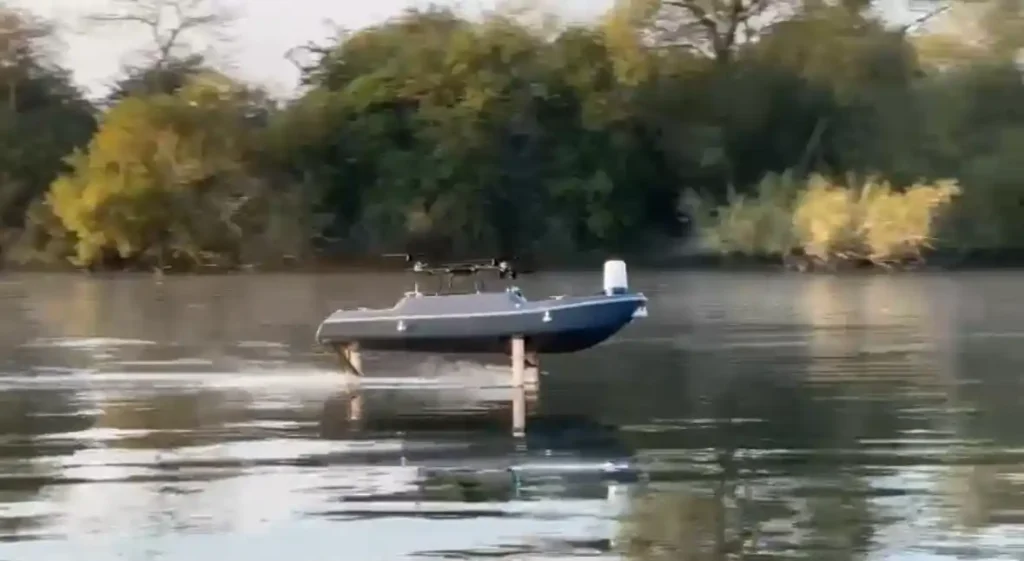
Autonomous surface vessels are increasingly relevant to military logistics because they can undertake maritime transport missions without requiring personnel onboard.
Unlike conventional crewed vessels, an autonomous logistics platform can be designed around a specific operational requirement, prioritising payload capacity, range, efficiency and reduced signature.
For ship-to-shore resupply, this creates several potential advantages.
Reducing the Exposure of Personnel
One of the most significant benefits of uncrewed maritime logistics is the ability to separate the movement of essential supplies from the movement of personnel.
Autonomous vessels can undertake missions in potentially hazardous environments without placing a crew directly onboard the platform.
This does not eliminate operational risk, but it can reduce the human consequences of a vessel being detected, intercepted or lost.
Supporting Distributed Maritime Operations
Modern naval forces increasingly recognise the value of operating across multiple locations rather than concentrating personnel and equipment in a small number of established bases.
However, distributed operations require equally distributed logistics.
Autonomous surface vessels can support this approach by transporting supplies between offshore locations, coastal positions and remote outposts without requiring every delivery to involve a larger crewed asset.
Reducing Dependence on Fixed Infrastructure
Conventional maritime logistics frequently depends on ports, landing facilities or suitable beaches.
Autonomous vessels provide additional flexibility by allowing supplies to be moved towards locations where established infrastructure is unavailable or unsuitable.
When combined with aerial delivery systems, this flexibility can extend beyond the shoreline itself.
SeaGlide: An Autonomous Maritime Platform for Contested Coastal Operations
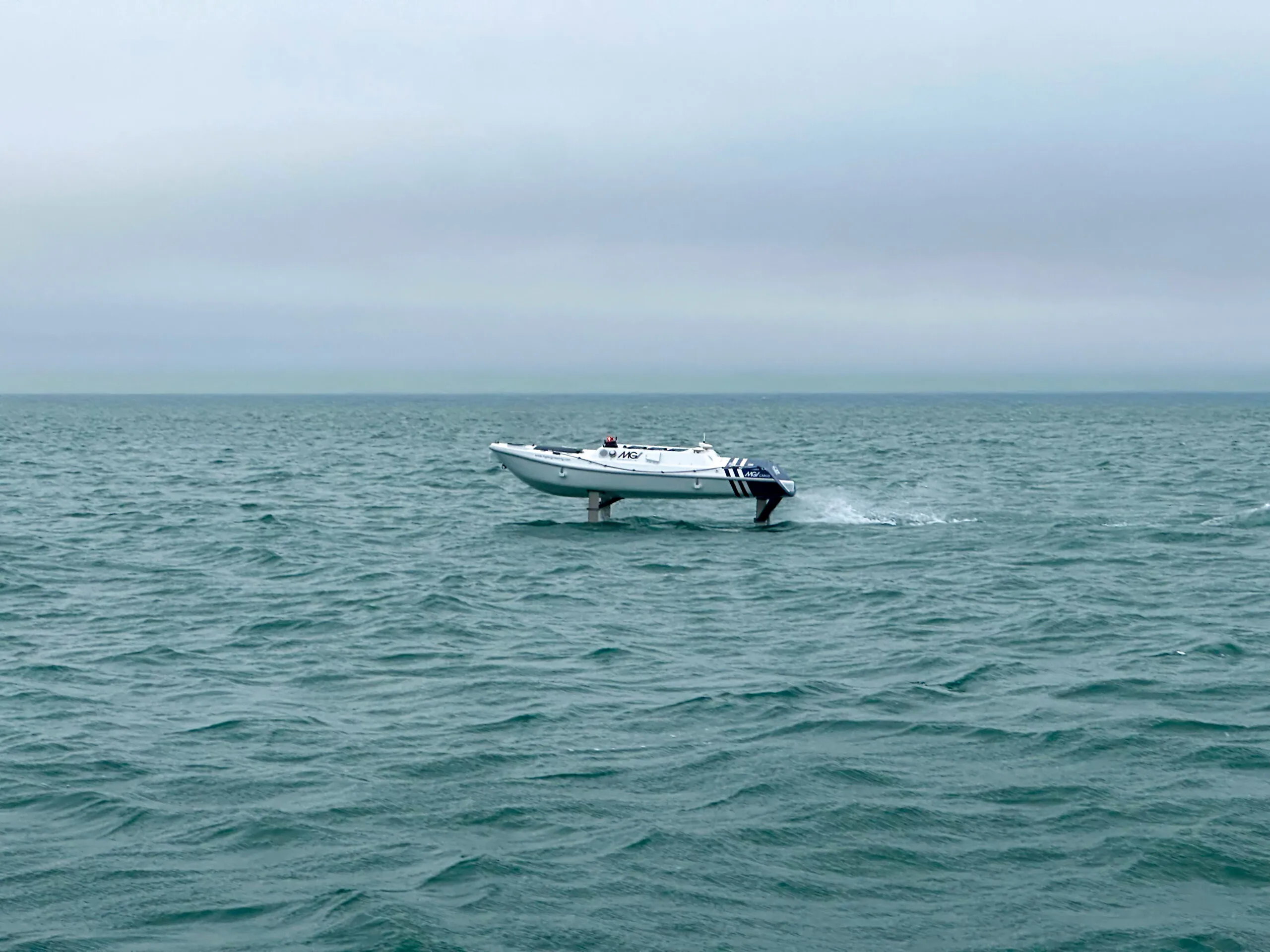
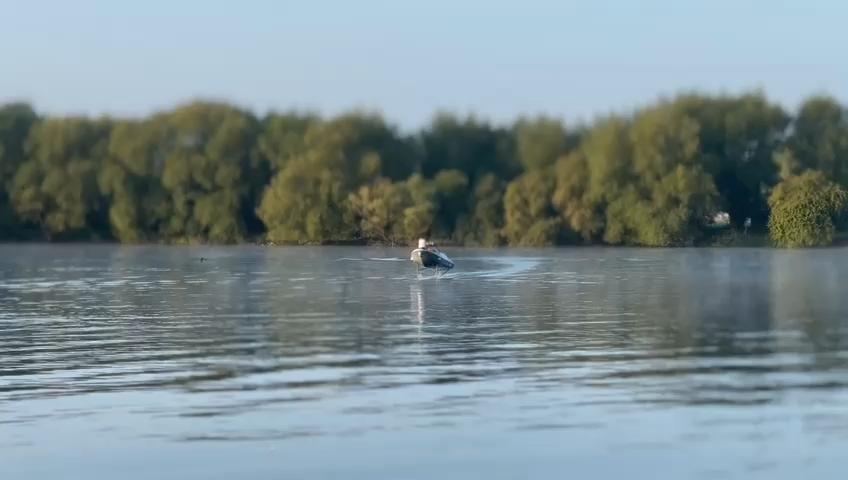
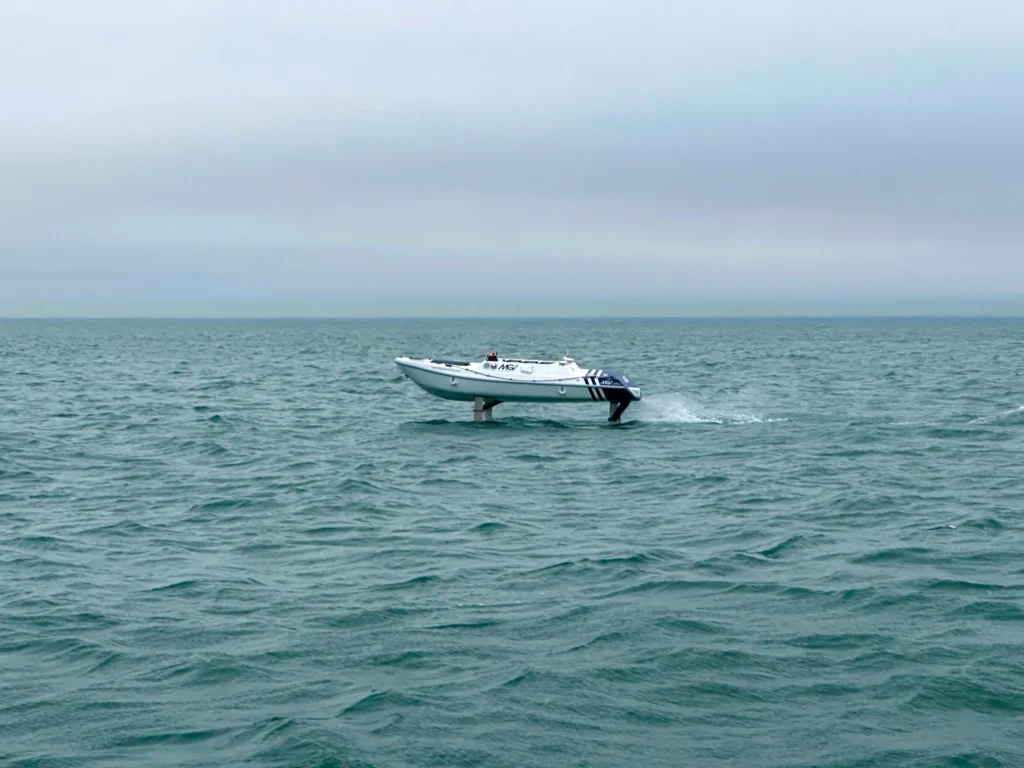
MGI Defence has developed SeaGlide as a lightweight, autonomous, hydrofoil-enabled uncrewed surface vessel designed for demanding maritime environments.
Drawing on MGI’s Formula 1 engineering heritage, SeaGlide combines advanced composite construction, efficient hydrodynamic design and autonomous navigation within a modular platform.
Its published capabilities include:
- 500 km operational range, supporting extended maritime missions.
- Up to 250 kg modular payload capacity, allowing different mission configurations.
- Advanced hydrofoil technology, designed to improve efficiency during maritime transit.
- Low acoustic and thermal signatures, supporting reduced-signature operations.
- Pre-programmed autonomous navigation, reducing dependence on continuous remote control.
- Navigation capabilities designed for degraded or denied environments, including situations where satellite navigation or communications may be disrupted.
These characteristics make SeaGlide relevant to a range of maritime applications, including the movement of supplies and the deployment of additional autonomous systems.
Importantly, SeaGlide is not simply a conventional boat with remote-control capabilities.
Its lightweight construction, modular architecture and autonomous operating concept reflect a broader approach to developing scalable uncrewed platforms for defence.
The objective is to provide useful operational capability without the cost, complexity and personnel requirements associated with larger conventional systems.

Overcoming the Final-Mile Challenge in Ship-to-Shore Resupply
Transporting supplies across open water is only part of the maritime logistics challenge.
Even when a vessel reaches the vicinity of its destination, the final stage of delivery can be particularly difficult.
A coastline may be inaccessible because of shallow water, rocks, cliffs or unsuitable landing conditions. The receiving unit may also be positioned inland, beyond the practical reach of a surface vessel.
This creates what is often described as the last tactical mile.
One approach is to combine the endurance and payload capacity of an autonomous surface vessel with the flexibility of an uncrewed aerial vehicle.
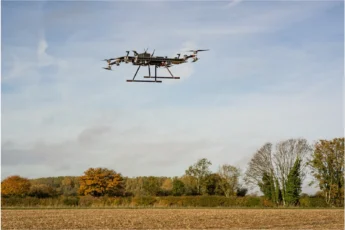
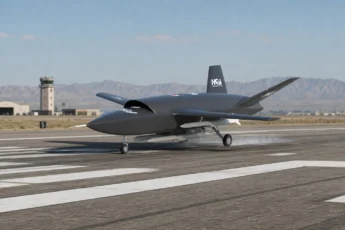
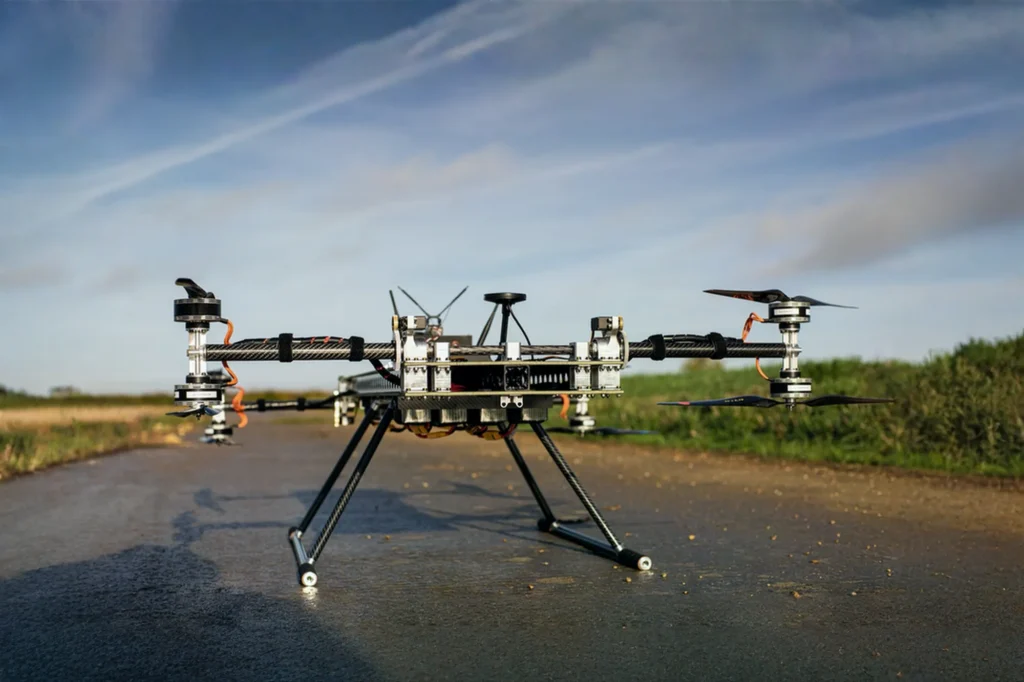
MGI Defence’s R10 heavy-lift UAV provides an aerial delivery capability that can complement SeaGlide’s maritime transport role.
Under this concept, SeaGlide undertakes the longer maritime journey, carrying equipment or supplies towards the coastal operating area.
Once positioned appropriately, an aerial platform can complete the final delivery stage, transporting selected payloads to locations that may be difficult to access directly from the water.
This division of responsibilities offers an important operational advantage.
The surface vessel handles the extended maritime transit, while the UAV is used for the shorter aerial delivery phase.
By avoiding the requirement for a cargo UAV to undertake the entire over-water journey, the combined approach can make more effective use of the different performance characteristics of maritime and aerial platforms.
MGI has explored this integration in greater detail in its article, From Sea to Shore: Building a Complete End-to-End Autonomous Supply Chain in Contested Environments.
Resupplying Islands, Remote Outposts and Dispersed Forces
One of the clearest applications for autonomous ship-to-shore resupply is supporting forces operating across geographically dispersed maritime environments.
Island chains and remote coastal positions present particular logistical challenges.
Distances between locations can be considerable, while individual units may require relatively small quantities of essential equipment at irregular intervals.
Maintaining these positions through conventional logistics can involve repeated journeys by crewed vessels or aircraft, increasing operational costs and the exposure of valuable assets.
Autonomous maritime platforms offer a potential alternative for selected resupply missions.
Supporting Island-Based Operations
Forces operating across archipelagos may be separated by stretches of open water, with limited access to established landing facilities.
Autonomous surface vessels could provide an additional means of transporting essential supplies between maritime support locations and individual islands.
Where direct shoreline access is impractical, aerial delivery systems could provide the final connection to the receiving unit.
Sustaining Remote Coastal Positions
Small military detachments, surveillance teams and forward operating positions may require regular deliveries of batteries, communications equipment, medical supplies and other consumables.
Using autonomous platforms for suitable deliveries could reduce the need to commit larger transport assets to relatively small logistical tasks.
Maintaining Operational Flexibility
The requirements of dispersed forces can change rapidly.
A position that initially requires communications equipment may subsequently need replacement components, medical supplies or additional power systems.
Modular autonomous logistics platforms provide the opportunity to adapt payload configurations to different mission requirements, rather than relying on a single fixed-purpose system.
This flexibility becomes particularly valuable when operating conditions and logistical priorities change at short notice.
Autonomous Logistics in GPS-Denied and Electronically Contested Environments
Electronic warfare is an increasingly important consideration for military logistics.
Satellite navigation signals can be degraded, jammed or spoofed, while communications links may become unreliable or unavailable.
For autonomous ship-to-shore resupply, this creates a fundamental engineering requirement: platforms must be designed to maintain appropriate levels of operational capability without depending entirely on continuous external guidance.
SeaGlide has been developed with autonomous navigation and operation in degraded or denied environments as part of its design philosophy.
Pre-programmed mission execution can reduce reliance on continuous remote control, while resilient navigation capabilities are important when satellite-based positioning becomes unreliable.
However, autonomy in contested environments involves more than simply following a predetermined route.
Effective systems must also account for changing environmental conditions, navigational hazards, mission constraints and the possibility of degraded sensor information.
The level of autonomy required will depend on the mission, operating environment and applicable safety requirements.
For defence customers, the objective is to develop systems capable of maintaining useful functionality when conventional communications and navigation assumptions can no longer be guaranteed.
This is a central consideration in MGI Defence’s wider approach to autonomous logistics in denied environments.
Why Low-Cost, Scalable Autonomous Platforms Matter
The value of autonomous military resupply cannot be measured solely by payload capacity or operational range.
Cost, manufacturing scalability and the ability to adapt platforms to changing requirements are equally important.
In contested environments, the possibility of losing an autonomous system must be considered as part of the operational and economic assessment.
If every logistics platform is expensive, highly specialised and difficult to replace, the advantages of distributed autonomy may be undermined.
This is where MGI Defence’s engineering background provides an important distinction.
MGI applies methodologies developed through Formula 1 engineering, where rapid development, lightweight structures, efficient design and continuous iteration are essential.
These capabilities translate directly into the development of autonomous defence platforms.
Lightweight Composite Engineering
Advanced composite materials allow structures to be developed with a strong emphasis on weight, strength and efficiency.
For maritime autonomous systems, reducing unnecessary structural mass can help improve the balance between payload capacity, endurance and performance.
Rapid Design and Prototyping
Traditional defence development programmes can involve lengthy design and approval cycles.
MGI’s F1-derived engineering approach supports rapid design iteration, prototyping and refinement, enabling a more responsive approach to emerging operational requirements.
For defence customers, this means development cycles measured in weeks rather than months where the scope and complexity of the requirement permit.
Scalable Manufacturing
Autonomous logistics systems become particularly valuable when they can be deployed in sufficient numbers to support distributed operations.
Designing platforms with manufacturability and unit cost in mind from the outset helps create a more practical route towards scalable production.
Rather than treating affordability as a secondary consideration, MGI incorporates it into the engineering process.
This approach is explored further in our article, Rapid Drone Prototyping: Why Defence Needs Development Cycles Measured in Weeks, Not Years.
Building More Resilient Maritime Supply Networks
Autonomous ship-to-shore resupply should not be viewed simply as a replacement for conventional maritime transport.
Large crewed vessels, helicopters and established logistics infrastructure will continue to play essential roles in sustaining military operations.
The opportunity lies in using autonomous systems to complement these capabilities, particularly for missions where conventional transport is inefficient, difficult or unnecessarily hazardous.
A more distributed logistics network could combine several different transport methods.
Larger vessels might deliver supplies to offshore support locations, while autonomous surface platforms undertake selected onward maritime movements.
Uncrewed aerial systems could then provide the final delivery stage where terrain or access restrictions prevent direct surface delivery.
Such an approach has the potential to reduce dependence on individual transport routes and provide commanders with additional logistical options.
It also introduces new considerations, including mission coordination, payload transfer, maintenance, recovery and the management of multiple autonomous assets.
These factors need to be addressed through integrated system design rather than treating each platform as an isolated capability.
For MGI Defence, this systems-level approach is central to developing autonomous platforms that can operate together across maritime and aerial environments.
The Future of Ship-to-Shore Military Resupply
As naval forces adapt to increasingly dispersed and contested operating environments, the ability to maintain reliable supply lines will remain fundamental to operational effectiveness.
Autonomous maritime logistics offers a way to address some of the limitations of conventional ship-to-shore transport, particularly where personnel exposure, restricted coastal access and disrupted communications create significant challenges.
MGI Defence’s SeaGlide demonstrates how lightweight engineering, modular payload capacity and autonomous navigation can be brought together within a maritime platform designed for these demanding environments.
When integrated with complementary aerial systems such as the R10, it also provides a foundation for more flexible approaches to the final stages of coastal resupply.
The longer-term opportunity is not simply to replace individual logistics vehicles with uncrewed alternatives.
It is to develop resilient, scalable and adaptable supply networks capable of supporting military operations as circumstances change.
Through its Formula 1-derived engineering expertise, MGI Defence is helping to accelerate the development of the autonomous technologies required to make this possible.
Discover more about SeaGlide and how MGI Defence can develop mission-specific autonomous maritime solutions.
Frequently Asked Questions
What is autonomous ship-to-shore resupply?
Autonomous ship-to-shore resupply involves using uncrewed systems to transport essential supplies from maritime locations to forces operating ashore. These systems can include autonomous surface vessels and cargo UAVs, reducing the need for crewed transport during selected stages of the delivery process.
How can autonomous surface vessels support military logistics?
Autonomous surface vessels can transport equipment and supplies across maritime environments without requiring personnel onboard. They can support distributed operations, reduce dependence on crewed logistics assets and provide additional options for supplying remote coastal positions.
What makes SeaGlide suitable for maritime resupply operations?
MGI Defence’s SeaGlide combines a published 500 km range, up to 250 kg modular payload capacity, lightweight composite construction and autonomous navigation. Its hydrofoil design and low acoustic and thermal signatures support its role as a flexible maritime delivery platform.
Can autonomous ship-to-shore resupply operate without GPS?
Autonomous systems can be designed to operate in environments where GPS or other satellite navigation signals are degraded or unavailable. SeaGlide incorporates navigation capabilities intended for contested environments, although the operational performance of any autonomous system depends on its configuration, mission requirements and environmental conditions.
How can UAVs improve ship-to-shore resupply?
Cargo UAVs can provide the final delivery stage when a surface vessel cannot reach the intended destination. By transporting supplies from an offshore autonomous platform to a coastal or inland position, UAVs can help overcome obstacles such as cliffs, shallow water and unsuitable landing areas.
Why are low-cost autonomous systems important for military resupply?
Low-cost autonomous platforms can make distributed logistics more economically sustainable, particularly in contested environments where equipment losses must be anticipated. Scalable manufacturing and modular designs can also help defence organisations adapt their logistics capabilities as operational requirements evolve.