Modern defence technology is evolving at a pace that traditional drone prototyping development and procurement cycles were never designed to accommodate.
Autonomous systems, electronic warfare, artificial intelligence, sensor technology and uncrewed aircraft are advancing rapidly. At the same time, operational experience can expose new requirements almost as quickly as engineers can respond to them. A capability that appears well suited to an operational environment today may need different sensors, communications, payloads or flight characteristics within months.
For defence organisations, this creates a fundamental engineering challenge: how do you develop capable autonomous systems quickly enough to remain relevant to the environment in which they will actually operate?
Increasingly, the answer lies in rapid prototyping, iterative development and scalable manufacturing — with development cycles measured in weeks rather than years.
This is an area in which MGI Engineering brings experience from one of the most demanding rapid-development environments in engineering: Formula 1.
What Is Rapid Drone Prototyping?
Rapid drone prototyping is an engineering approach in which an uncrewed aircraft or autonomous platform moves quickly from concept through design, manufacture and physical testing.
Rather than attempting to create a completely finished system through a long, linear development programme, engineers develop functional prototypes, test them, learn from the results and incorporate those findings into subsequent iterations.
The process can broadly be considered as:
Requirement → Design → Prototype → Test → Learn → Refine → Manufacture
The objective is not simply to make development faster.
It is to create a development process capable of responding continuously to changing requirements, technologies and operational lessons.
That distinction is particularly important in defence.
Why Traditional Development Cycles Are Under Pressure
Historically, major defence platforms have often been developed around long service lives and lengthy acquisition programmes. That remains appropriate for many large and complex systems.
But autonomous and uncrewed systems present a different challenge.
Sensors improve. Computing becomes more capable. Autonomy develops. Electronic warfare threats evolve. Communications environments change. New payload requirements emerge. Operational experience reveals weaknesses and opportunities that may not have been apparent when the original specification was written.
A development programme that takes years to respond risks delivering a system optimised for the environment that existed when the programme began rather than the one encountered when the platform enters service.
Rapid drone prototyping offers another model.
Instead of treating the aircraft as a fixed capability, the platform can be developed as an evolving system that is continually refined around changing requirements.
What Defence Can Learn from Formula 1
Formula 1 provides an unusually relevant engineering model for this challenge.
An F1 team operates in an environment where development never really stops. Engineers design components, manufacture them, test them, analyse their performance and rapidly feed the results into the next iteration.
Development times are compressed because competitive circumstances change constantly.
A solution does not need to remain unchanged for years. It needs to solve the current engineering problem effectively while providing a foundation for further development.
MGI’s engineering expertise has its roots in this world.
Founded by former Formula 1 engineers, MGI applies F1-derived methodologies to the design, prototyping and manufacture of advanced autonomous systems.
The connection between Formula 1 and defence is not about motorsport technology being transferred directly into military aircraft. It is about transferring an engineering methodology.
That methodology places particular emphasis on rapid design, lightweight structures, advanced composites, manufacturing efficiency, continuous iteration and the ability to move quickly from an engineering concept to a physical system.
For emerging autonomous defence platforms, these characteristics are increasingly valuable.
Rapid Innovation for Rapidly Changing Environments
Modern military operations are increasingly shaped by contested electromagnetic environments.
GPS may be degraded or unavailable. Communications can be disrupted. Electronic signatures can expose platforms to detection. Sensors and countermeasures continually evolve.
Uncrewed systems designed for these environments therefore cannot depend upon yesterday’s assumptions remaining valid indefinitely.
The ability to modify a platform rapidly becomes an operational advantage in its own right.
A change might involve a different payload, revised sensor configuration, alternative communications architecture, modifications to airframe characteristics or integration with new autonomous systems.
With an iterative engineering model, these changes can be incorporated into subsequent development cycles rather than requiring an entirely new aircraft programme.
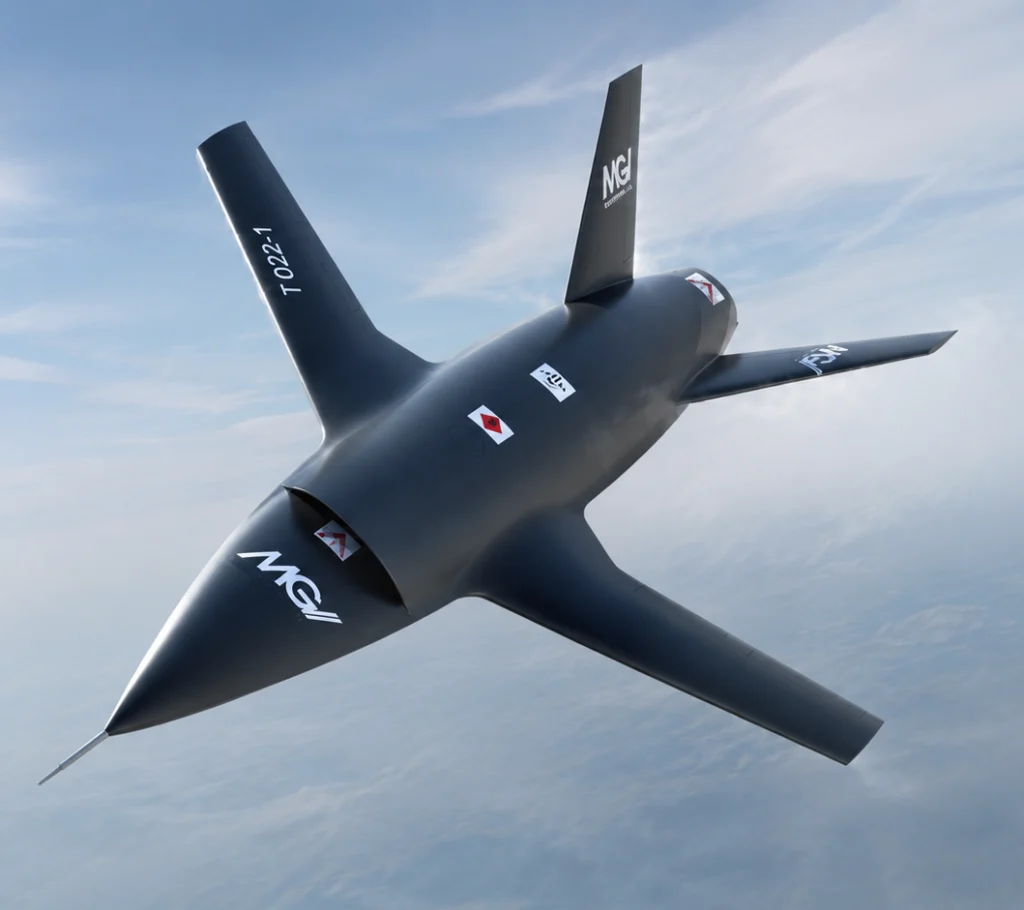
MGI’s approach is based around exactly this type of rapid response. Defence clients can work with engineering teams to refine systems against specific operational requirements, with iterations delivered on timescales measured in weeks rather than months.
From Prototype to Operationally Relevant System
Rapid prototyping should not be confused with simply producing experimental aircraft quickly.
A useful defence development process must eventually bridge the gap between prototype and manufacturable system.
That means thinking about production from the beginning.
Materials, manufacturing processes, component availability, assembly complexity and cost all influence whether a platform that works as a prototype can realistically be produced at scale.
This is particularly important as defence organisations increasingly examine attritable and affordable autonomous systems.
If autonomous platforms are intended to be deployed in meaningful numbers, engineering decisions cannot be based solely on maximum theoretical performance. Cost, manufacturing speed, maintainability and scalability become part of the capability equation.
The best engineering solution may therefore be the one that delivers sufficient operational performance while remaining straightforward enough to manufacture quickly and economically.
Lightweight Composites and Rapid Manufacture
MGI’s Formula 1 heritage also brings extensive experience in lightweight structures and composite engineering.
Weight has an immediate effect on aircraft performance. Reducing structural mass can create opportunities for increased payload, greater range or different propulsion and mission configurations.
But advanced structures also need to be manufacturable.
Rapid prototyping allows engineers to explore this relationship between structural performance and manufacturing efficiency early in the programme.
Instead of designing an aircraft first and determining how to manufacture it later, the two processes can develop together.
This becomes particularly valuable when the eventual objective is scalable drone production rather than a handful of highly specialised demonstrators.
Open Architecture Supports Faster Development
The airframe is only one part of a modern autonomous platform.
Mission systems, sensors, communications, avionics, autonomy and payloads can change much faster than the basic aerodynamic configuration.
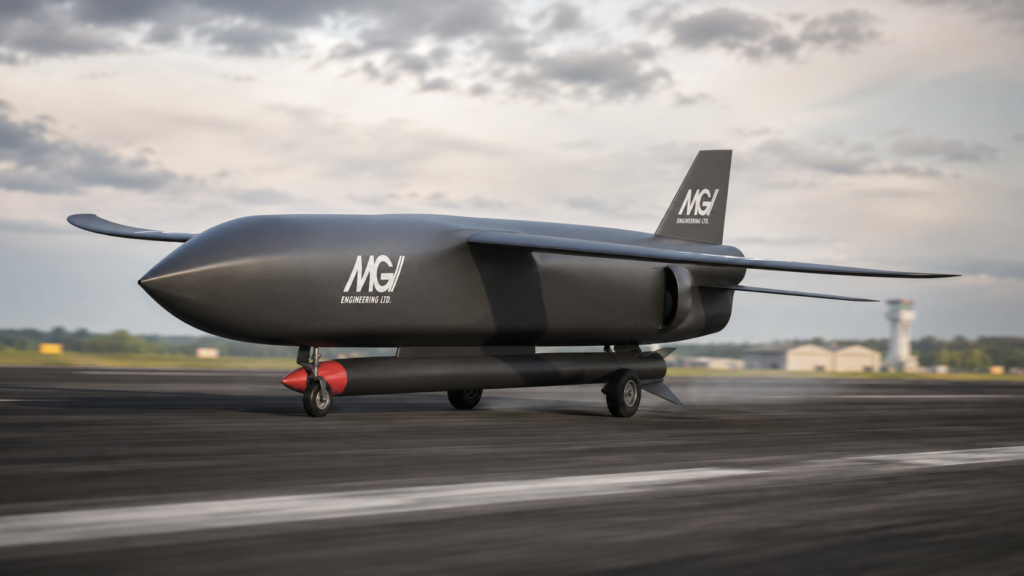
An open and modular approach therefore allows new technologies to be incorporated without repeatedly redesigning the entire aircraft.
This can significantly shorten development cycles.
A platform capable of accepting different payloads or avionics configurations can be adapted for new roles as requirements change.
It also helps prevent the aircraft becoming dependent upon a single technology that may be overtaken during its operational life.
The result is a more adaptable autonomous platform — one that can evolve alongside the technologies it carries.
Rapid Prototyping and the Economics of Attritable Systems
Rapid development also changes the economics of autonomous defence systems.
Traditional combat aircraft represent enormous concentrations of capability and investment. As a result, protecting individual platforms becomes strategically important.
Attritable autonomous systems introduce a different calculation.
They are designed to deliver useful operational capability at a price that allows them to be deployed in greater numbers and, where necessary, placed at greater risk.
That requires a different engineering philosophy.
Exquisite performance at any cost is replaced by a focus on cost-per-effect, scalability and operational usefulness.
Rapid prototyping supports this philosophy because unnecessary complexity can be identified and removed through repeated physical development and testing.
Instead of engineering every theoretical capability into the first design, systems can mature around genuine operational requirements.
Scalable Drone Production Matters as Much as Innovation
The ability to develop an advanced prototype is valuable. The ability to manufacture that system repeatedly and economically is potentially far more important.
Recent conflicts and wider changes in defence planning have highlighted the importance of mass.
Autonomous systems may increasingly need to be available not in tens but in hundreds or potentially thousands, depending on their role.
That changes the engineering challenge.
A platform intended for scalable production needs repeatable manufacturing processes, sensible material choices, readily available components and an architecture that avoids unnecessary production complexity.
MGI’s experience of working in fast-paced engineering environments helps bridge the gap between innovation and production.
The objective is not merely rapid drone prototyping, but rapid development of systems capable of moving towards scalable manufacture for defence applications.
Development Speed Can Become a Capability
There is a tendency to think of range, payload, speed and endurance as the defining measures of an uncrewed aircraft.
But development speed itself can increasingly be considered a capability.
Imagine two autonomous systems with broadly comparable performance.
One requires a lengthy engineering programme whenever operational requirements change. The other can be modified, manufactured, tested and redeployed through rapid iterative development.
Over time, the second system may provide considerably greater operational value because it can continuously adapt.
This is particularly significant in electronic warfare.
A system’s ability to operate in a contested environment is unlikely to be a problem that can be solved once and considered complete. Threats and countermeasures will continue evolving.
Engineering therefore needs to evolve with them.
Software-Defined Capability and Physical Engineering
The future of autonomous defence systems will inevitably be increasingly software-defined.
Autonomy, mission planning, sensor fusion and collaborative behaviour can all be changed through software.
But software cannot eliminate the need for rapid physical engineering.
New sensors require integration. Different payloads change weight and balance. Communications equipment affects power requirements and electromagnetic characteristics. Increased computing capability may create cooling requirements. Different mission profiles can require structural or aerodynamic changes.
The most responsive defence development environment therefore combines rapidly evolving software with equally agile hardware engineering.
This is another reason why short physical prototyping cycles remain important.
UK Sovereign Engineering Capability
Rapid development also has a strategic dimension.
The ability to design, manufacture and modify autonomous defence platforms domestically reduces reliance on lengthy international supply chains and allows systems to be adapted around sovereign requirements.
For the UK, maintaining expertise in autonomous aircraft, lightweight structures, composites, advanced manufacturing and rapid prototyping therefore represents more than an industrial opportunity.
It contributes to sovereign defence capability.
A UK autonomous drone manufacturer able to move rapidly from requirement to prototype and from prototype towards production can respond to changing national requirements without waiting for the development cycles of overseas programmes.
From Requirement to Flight in Weeks, Not Years
The central lesson from rapid engineering environments such as Formula 1 is straightforward: development does not have to be a linear process measured in years.
Design, manufacture, testing and learning can operate as a continuous loop.
For defence, that means moving away from the assumption that every autonomous platform must emerge from a long development programme with every future requirement already defined.
Instead, systems can be designed to evolve.
MGI applies its F1-based engineering methodologies to the rapid design, prototyping and manufacture of autonomous systems for defence. By combining lightweight engineering, advanced composites, modular architectures and rapid iteration, MGI can help defence clients develop platforms around specific operational requirements and respond as those requirements change.
In an environment where technology, threats and tactics can evolve rapidly, the ability to respond within weeks rather than months or years is becoming increasingly important.
The future advantage may not belong solely to the organisation with the most advanced autonomous platform today.
It may belong to the organisation capable of designing, testing, manufacturing and improving the next version faster than the operational environment can change.
Frequently Asked Questions
What is rapid drone prototyping?
Rapid drone prototyping is an iterative engineering process that moves quickly from requirement and design to physical prototype, testing and refinement. Rather than relying on a long linear development programme, lessons from each prototype are incorporated into subsequent versions.
Why is rapid prototyping important for defence drones?
Autonomous defence systems operate in environments where technology, electronic warfare threats, communications and mission requirements can change quickly. Rapid prototyping allows aircraft and mission systems to evolve in response to these changes rather than remaining fixed around an outdated specification.
How is Formula 1 engineering relevant to defence?
Formula 1 requires extremely fast cycles of design, manufacture, testing and improvement. MGI applies this F1-derived engineering methodology to autonomous defence systems, combining rapid iteration with expertise in lightweight structures, composites and advanced manufacturing.
Can rapid prototyping help reduce the cost of military drones?
Rapid prototyping can help engineers identify unnecessary complexity and refine a platform around genuine operational requirements. When combined with design-for-manufacture principles, this can support more affordable and scalable autonomous systems.
Why is scalable drone production important?
Many future autonomous defence concepts depend on deploying systems in significant numbers. This means platforms need to be designed not only for performance but also for repeatable, economical manufacture.
How quickly can autonomous defence platforms be developed?
Timescales depend on the complexity and requirements of each programme. MGI’s engineering approach is designed around rapid iteration, enabling responses to changing defence requirements on timescales measured in weeks rather than months wherever the programme allows.
What is the advantage of modular autonomous platforms?
Modular and open architectures allow sensors, payloads, communications equipment, avionics and other technologies to be changed without redesigning the entire aircraft. This helps autonomous platforms evolve as technologies and operational requirements change.