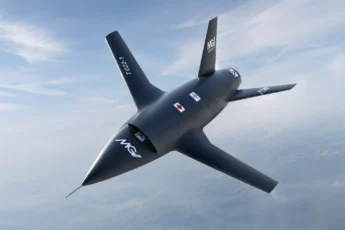
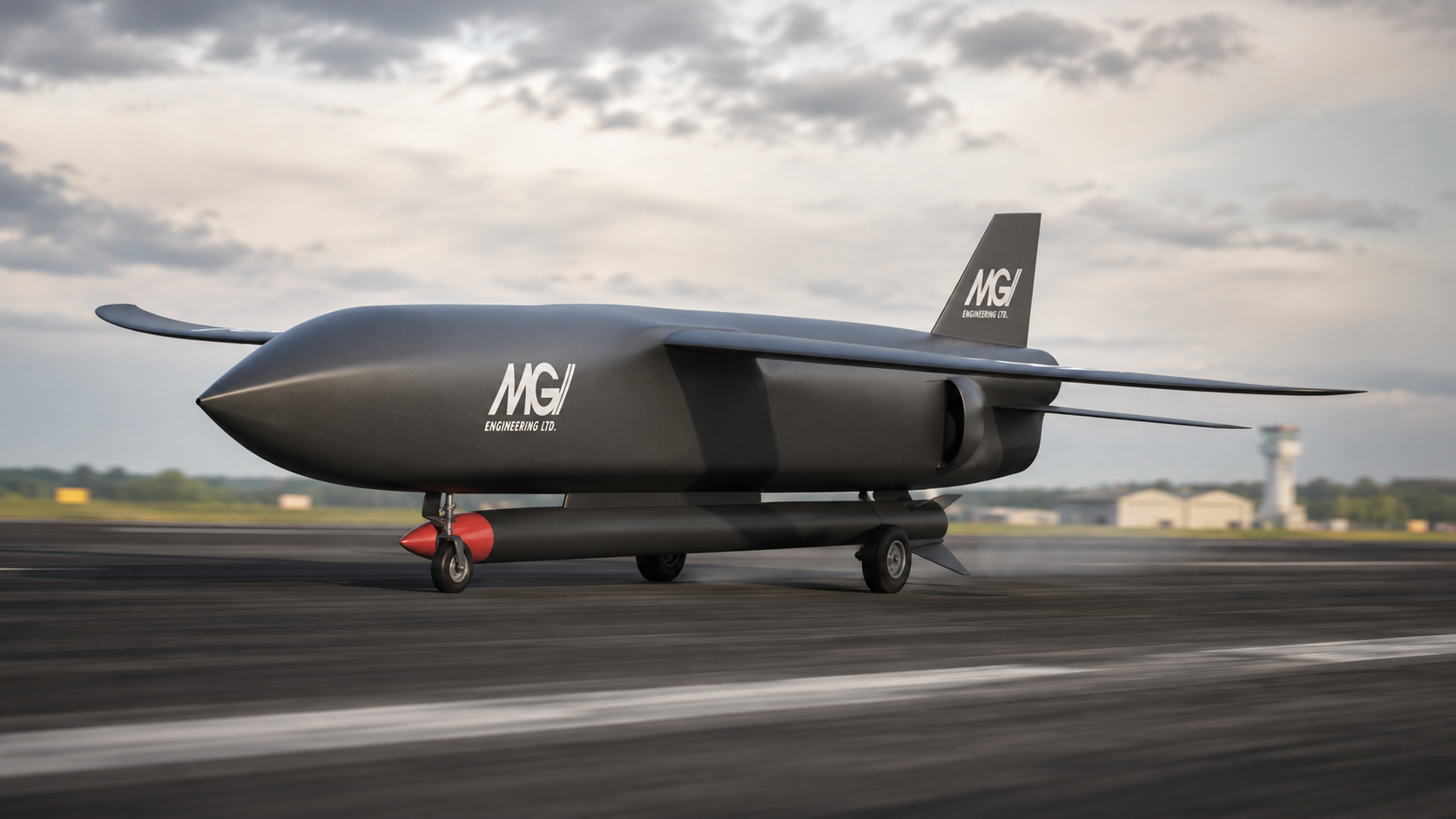
Modern air power is undergoing one of its most significant transformations since the introduction of stealth aircraft. While headlines often focus on sixth-generation fighters and advanced missiles, another capability is quietly reshaping military thinking: attritable drones.
Designed to deliver meaningful combat capability at a fraction of the cost of traditional combat aircraft, attritable drones allow military forces to generate greater operational mass, increase resilience and accept levels of risk that would be unthinkable with high-value crewed platforms.
However, despite popular discussion, attritable drones are not replacing fighter aircraft. Instead, they are becoming force multipliers that enable crewed and uncrewed systems to operate together as part of a more agile and resilient force.
What Does ‘Attritable’ Mean?
The term attritable refers to military systems that are affordable enough to be risked during operations while remaining capable enough to deliver significant operational value.
Unlike disposable or expendable systems, attritable platforms are expected to survive missions where possible, but commanders can accept their loss if operational circumstances require.
This creates a new category between:
- High-value crewed aircraft that must be protected at almost any cost.
- One-way effectors designed for a single mission.
- Fully reusable platforms intended for repeated operations.
Attritable systems provide an important balance between capability, affordability and operational flexibility.
Why Air Forces Are Rethinking Fleet Composition
Modern combat aircraft represent extraordinary technological achievements, but they also present significant challenges.
Advanced fighter aircraft can cost tens or even hundreds of millions of pounds to procure, require extensive maintenance infrastructure and involve years of pilot training. Every loss represents not only a financial cost but also the potential loss of highly trained personnel.
At the same time, modern conflicts increasingly involve:
- Dense integrated air defence systems
- Electronic warfare
- Long-range precision weapons
- Large numbers of autonomous threats
- Rapid operational tempo
These conditions demand greater force mass than traditional air forces can economically generate using only crewed aircraft.
Attritable drones help address this challenge.
Generating Combat Mass at Scale
One of the greatest advantages of attritable platforms is the ability to deploy larger numbers of aircraft without dramatically increasing procurement costs.
Rather than relying on a relatively small fleet of exquisite aircraft, commanders can combine crewed platforms with autonomous systems capable of:
- Intelligence, Surveillance and Reconnaissance (ISR)
- Electronic warfare
- Decoy operations
- Precision strike
- Communications relay
- Sensor extension
- Cooperative targeting
Instead of placing every capability onto one expensive aircraft, missions can be distributed across multiple autonomous platforms.
This approach significantly improves operational resilience while reducing overall mission risk.
They Are Not Replacing Fighter Aircraft
One of the biggest misconceptions surrounding attritable drones is that they are intended to replace advanced fighter aircraft.
They are not.
Modern fighters remain essential for:
- Air superiority
- Human decision-making during complex engagements
- Strategic deterrence
- Long-range command and control
- Flexible mission management
Instead, attritable drones are increasingly viewed as collaborative systems.
Operating alongside crewed aircraft, they can perform the higher-risk tasks that would otherwise place expensive aircraft and pilots in danger.
This concept is often described as Manned-Unmanned Teaming (MUM-T) or Collaborative Autonomy, where autonomous platforms extend the reach and effectiveness of crewed assets rather than replacing them.
Operating Inside Contested Environments
Future conflicts are expected to occur within highly contested electromagnetic environments where GPS may be degraded or denied and communications disrupted.
This places greater emphasis on autonomous capability.
Modern attritable platforms are increasingly designed to:
- Navigate without continuous GPS availability
- Operate with degraded communications
- Continue missions autonomously
- Adapt to changing tactical situations
- Support distributed operations
Rather than depending on constant human control, increasing levels of onboard autonomy enable missions to continue even when traditional command links are interrupted.
Supporting Electronic Warfare Operations
Electronic warfare has become one of the defining characteristics of modern conflict.
Rather than exposing high-value aircraft to hostile jamming and electronic attack, attritable systems can undertake:
- Electronic reconnaissance
- Electromagnetic mapping
- Decoy operations
- Communications extension
- Electronic attack support
Because these missions often involve higher operational risk, lower-cost autonomous platforms become particularly attractive.
Cost-Per-Effect Is Becoming More Important Than Cost Per Aircraft
Historically, defence procurement focused heavily on acquiring the most capable individual platform.
Today, military planners increasingly consider cost-per-effect.
The objective is no longer simply owning the most advanced aircraft.
Instead, the focus is on achieving operational outcomes using combinations of complementary systems.
For example:
Rather than deploying one extremely expensive aircraft into a highly defended area, commanders may instead employ multiple lower-cost autonomous platforms to gather intelligence, suppress defences, confuse adversaries and support precision strike operations.
The overall mission effect may be greater while exposing fewer personnel to danger.
Open Architecture Enables Faster Development
Another major advantage of many modern attritable platforms is the adoption of open architecture design.
Rather than requiring complete redesigns whenever new technology becomes available, modular systems allow payloads, sensors, software and autonomy packages to evolve far more rapidly.
Benefits include:
- Faster technology insertion
- Reduced integration costs
- Easier payload upgrades
- Greater mission flexibility
- Lower through-life costs
This iterative approach reflects the increasing pace of technological change across defence.
Artificial Intelligence Is Expanding Capability
Artificial Intelligence is enabling autonomous aircraft to perform increasingly sophisticated tasks.
Current and future applications include:
- Collaborative mission planning
- Target recognition
- Autonomous navigation
- Dynamic route optimisation
- Swarm coordination
- Sensor fusion
- Threat prioritisation
Importantly, AI does not replace human command.
Instead, it allows autonomous platforms to execute routine or time-critical functions while keeping human operators responsible for higher-level mission decisions.
Attritable Does Not Mean Disposable
A common misunderstanding is that attritable drones are simply designed to be sacrificed.
This is incorrect.
Attritable platforms are intended to survive and return whenever possible.
Their affordability simply allows commanders greater freedom to accept operational risk when required.
This distinction is important.
Unlike one-way effectors, attritable drones can often be recovered, rearmed, upgraded and redeployed across multiple missions.
The Future of Air Power Is Collaborative
The future battlefield is unlikely to consist of either entirely crewed or entirely autonomous aircraft.
Instead, military capability is increasingly moving towards integrated force structures where:
- Crewed aircraft provide command and mission leadership.
- Autonomous Collaborative Platforms extend sensor reach.
- Attritable drones undertake higher-risk missions.
- One-way effectors deliver precision effects where appropriate.
- Swarms overwhelm or saturate enemy defences.
- Artificial Intelligence coordinates increasingly complex operations.
Together these capabilities provide greater flexibility than any individual platform alone.
MGI Defence’s Approach to Attritable Air Power
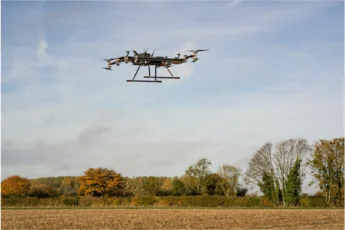
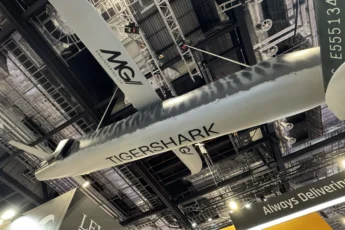
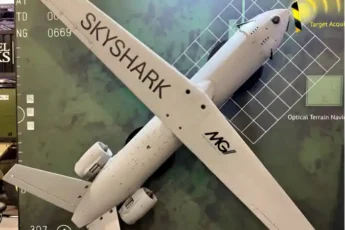
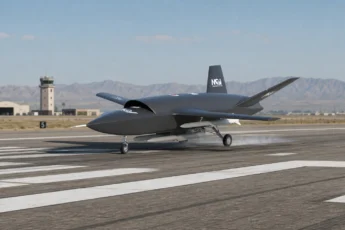
MGI Defence is developing a new generation of autonomous systems designed around the principles of affordability, scalability and collaborative autonomy.
Rather than pursuing increasingly expensive aircraft, MGI focuses on delivering platforms capable of operating as part of wider autonomous force structures.
Its Autonomous Collaborative Platforms are intended to support missions ranging from ISR and electronic warfare to precision strike and manned-unmanned teaming, helping defence organisations generate greater operational mass while maintaining the flexibility to adapt rapidly as operational requirements evolve.
As defence priorities increasingly focus on scalable autonomous capability rather than simply individual platform performance, attritable systems are expected to play an ever more important role in future air operations.
Frequently Asked Questions
What is an attritable drone?
An attritable drone is an autonomous military aircraft that is affordable enough to be risked during combat while remaining capable enough to deliver meaningful operational value.
Are attritable drones replacing fighter aircraft?
No. Attritable drones are designed to work alongside crewed aircraft, extending their capabilities through collaborative autonomy and manned-unmanned teaming.
What is the difference between an attritable drone and a one-way effector?
Attritable drones are generally intended to survive and be reused across multiple missions. One-way effectors are designed to deliver their effect during a single mission.
Why are attritable drones important?
They enable military forces to deploy larger numbers of capable autonomous systems, increasing operational mass, resilience and flexibility without the cost of expanding traditional fighter fleets.
What missions can attritable drones perform?
Typical missions include ISR, electronic warfare, communications relay, decoy operations, precision strike support, collaborative autonomy and sensor extension.