As modern battlefields become faster, more lethal and more electronically contested, armed forces are increasingly turning to expendable drones as a cost-effective way to project capability at scale. Unlike traditional UAVs designed for repeated use, expendable drones are optimised for low unit cost, rapid manufacture and operational impact, making them ideal for missions where conventional assets would be prohibitively expensive, too slow to field or too vulnerable to risk.
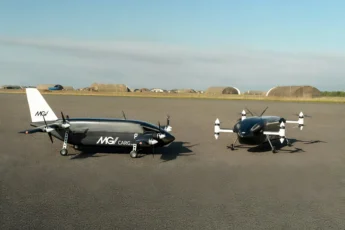
Expendable systems offer more than affordability—they unlock an entirely new way of thinking about airpower. By enabling mass deployment, distributed effects, increased survivability and operational agility, they reshape how militaries conduct ISR, precision strike, and denial-of-access operations. MGI’s SkyShark and TigerShark platforms exemplify this new paradigm: low-cost, autonomous, modularly designed one-way effectors (OWEs) able to operate independently or as part of a coordinated mass.
1. Why Expendable Drones Are Becoming Essential in Defence
The operational advantages of expendable drones stem from three converging pressures:
a. The rising cost of traditional airpower
Fast-jet sorties, high-end cruise missiles and reusable UAV platforms remain central to many doctrines, but their cost profiles make them increasingly difficult to deploy at scale. In contrast, expendable drones allow commanders to deliver meaningful effect without committing multi-million-pound assets.
b. The proliferation of advanced air defence systems
Peer and near-peer adversaries now routinely field layered systems that threaten large, slow or recoverable aircraft. Expendable drones offer a low-risk method of probing, saturating or disrupting these systems.
c. Operational tempo and attrition realism
Deployments in Ukraine, the Middle East and the South China Sea have demonstrated that attrition is once again a defining characteristic of modern conflict. Equipment must be replaceable quickly and cheaply. Expendable drones meet this requirement by being:
- Rapid to manufacture
- Simple to maintain
- Affordable to lose
MGI’s F1-inspired rapid prototyping and iterative design processes mean SkyShark and TigerShark can be produced in weeks, not months, giving operators decisive logistical resilience.
2. The Tactical Benefits of Expendable Drones
a. Risk-free capability projection
Because they are designed for one-way missions, expendable drones allow commanders to undertake tasks that would normally carry unacceptable risk. These include:
- Deep strikes into contested airspace
- Decoy operations to draw out enemy air defences
- High-threat ISR where loss rates are high
- Multi-axis attack profiles to overload defensive radars
SkyShark is optimised for precisely this type of risk-embracing mission profile, delivering ISR and effects into areas that would be inaccessible to conventional UAVs.
b. Cost-effective precision strike
Expendable drones bridge the gap between heavyweight cruise missiles and short-range munitions. They deliver precision effect at a fraction of the cost, particularly when deployed in numbers.
TigerShark’s payload capacity and speed make it a high-performance OWE, capable of delivering precision effect against hardened or mobile targets while keeping costs low enough to enable mass deployment.
c. Saturation and Overwhelm Tactics
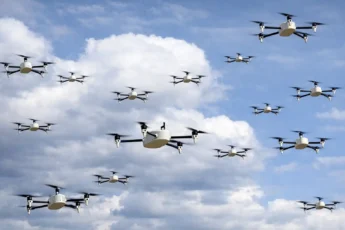
Modern air defences are designed to counter small numbers of high-value targets. They are much less effective against large numbers of autonomous, low-cost platforms approaching simultaneously from multiple vectors.
A combination of SkyShark and TigerShark in a coordinated strike group significantly increases the probability of mission success by:
- Forcing air defences to expend interceptors
- Overloading radar and targeting systems
- Masking high-value assets behind a swarm of expendable platforms
- Creating dilemmas faster than defenders can process
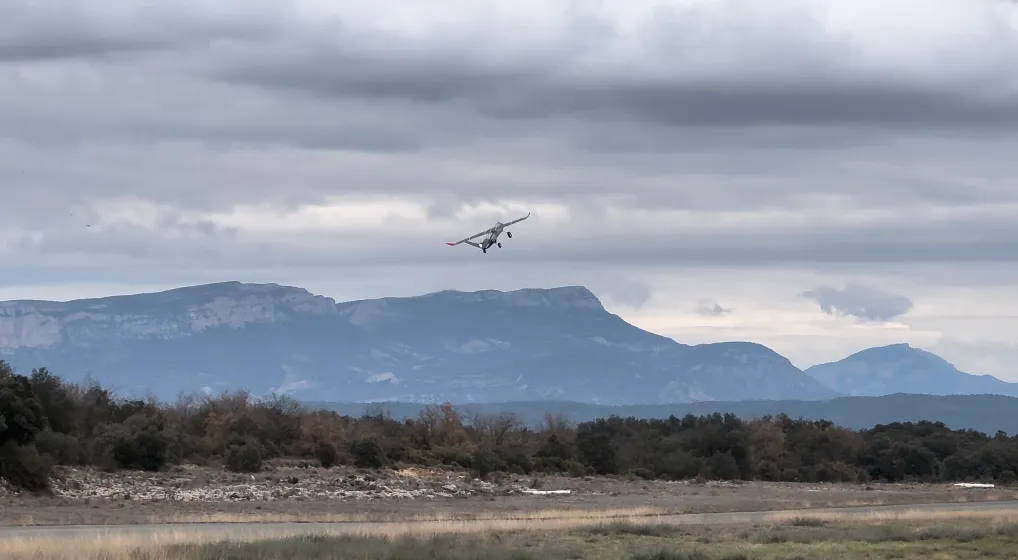
3. Survivability Through Autonomy and Distribution
Contrary to intuition, expendable drones can increase force survivability, not reduce it. The key lies in distributed autonomy.
a. No reliance on returning to base
Traditional UAVs must preserve fuel and airframe integrity to return. Expendable drones are liberated from this constraint, making them:
- More manoeuvrable
- Less predictable
- Able to fly energy-aggressive profiles
- Better suited for operations inside denied environments
SkyShark’s lightweight, low-signature design takes full advantage of this, combining speed and manoeuvrability with reduced detectability.
b. Resilience against electronic warfare
A major vulnerability for reusable drones is their dependency on continuous GPS or datalink connectivity. Expendable drones, using autonomy, onboard decision logic and pre-programmed mission waypoints, remain effective even under heavy jamming.
TigerShark, for example, is engineered for EW-resilient operation, ensuring mission continuation even with degraded inputs.
c. Dynamic tasking at the edge
With lightweight onboard processing, expendable drones can:
- Reprioritise targets
- Re-route autonomously
- Coordinate timing with other platforms
- Detect and strike opportunities of value
This creates a distributed, adaptive capability that requires minimal operator workload.
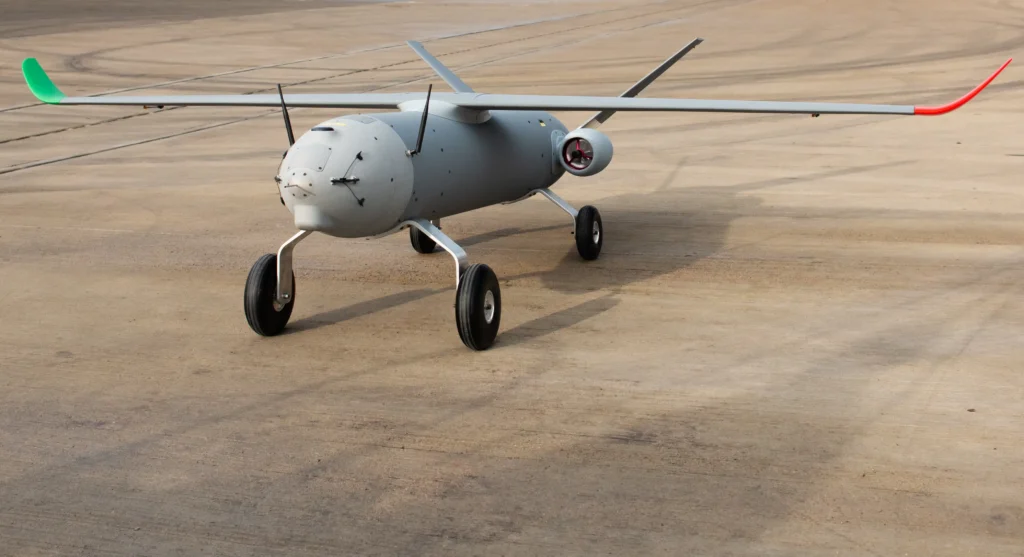
4. Manufacturing and Logistics: The Hidden Advantage
Expendable drones offer substantial strategic benefits beyond the tactical domain.
a. Rapid industrial scaling
MGI’s engineering model—derived from high-performance automotive and aerospace disciplines—prioritises:
- Modular design
- Low part count
- Lightweight composites
- Additive manufacturing where beneficial
This allows production lines to scale rapidly during conflict, a crucial advantage in prolonged contests of attrition.
b. Deployability and storage
Because SkyShark and TigerShark are compact, lightweight and modular, militaries can:
- Transport large quantities in ISO containers
- Pre-position units in forward operating bases
- Launch from austere environments
- Maintain stocks without extensive infrastructure
This logistics flexibility increases operational tempo and widens deployment options.
c. Simplified supply chains
Reusable drones require maintenance, spare parts, trained technicians and long-term fleet support. Expendable systems avoid this overhead entirely. What remains is:
- A small set of interchangeable components
- Efficient manufacturing pipelines
- Minimal forward repair infrastructure
This delivers unbeatable cost-per-effect.
5. SkyShark: Lightweight, Agile, Optimised for ISR and Precision Effect
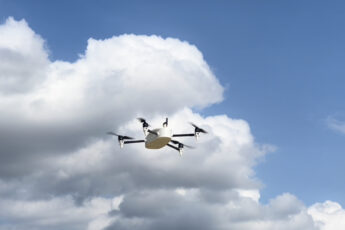
SkyShark represents MGI’s answer to the need for a low-cost, high-agility, expendable ISR and effect platform.
Key strengths include:
- Small visual and radar signature for operations in contested airspace
- High manoeuvrability, leveraging composite structures
- Simple, rapid launch options suitable for mobile or maritime platforms
- Payload flexibility, enabling surveillance, EW or small precision effect packages
- Mass deployability, ideal for saturation or deception operations
SkyShark excels in roles where affordable attrition is central to mission success, enabling commanders to push ISR and strike capability deeper than ever before.
6. TigerShark: High-Performance OWE for Deep Strike and Complex Effects
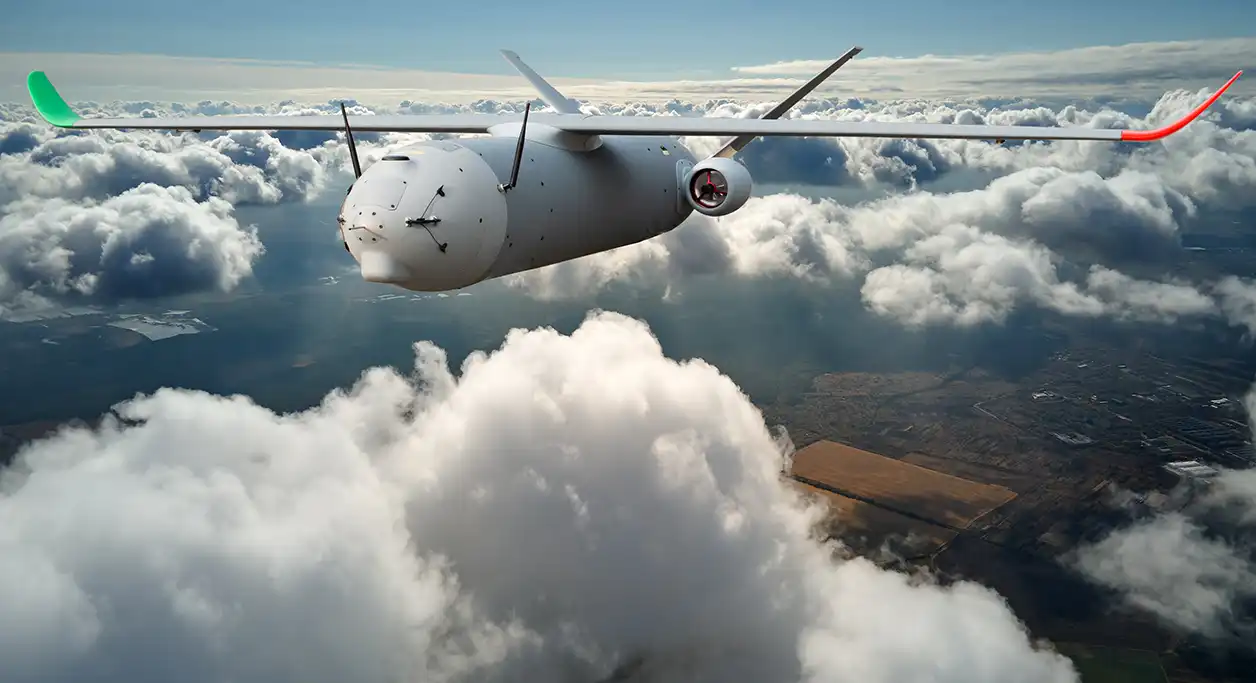
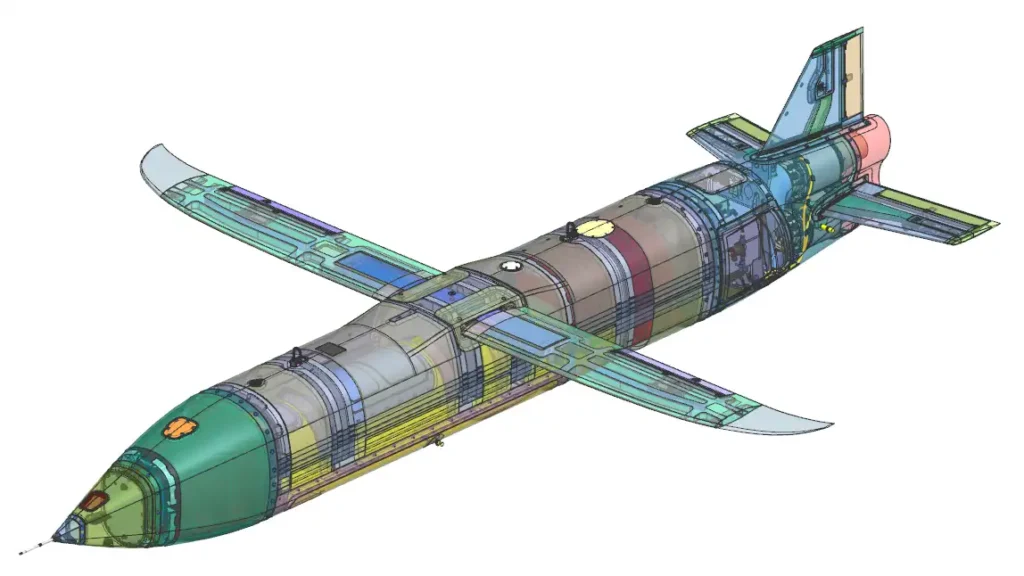
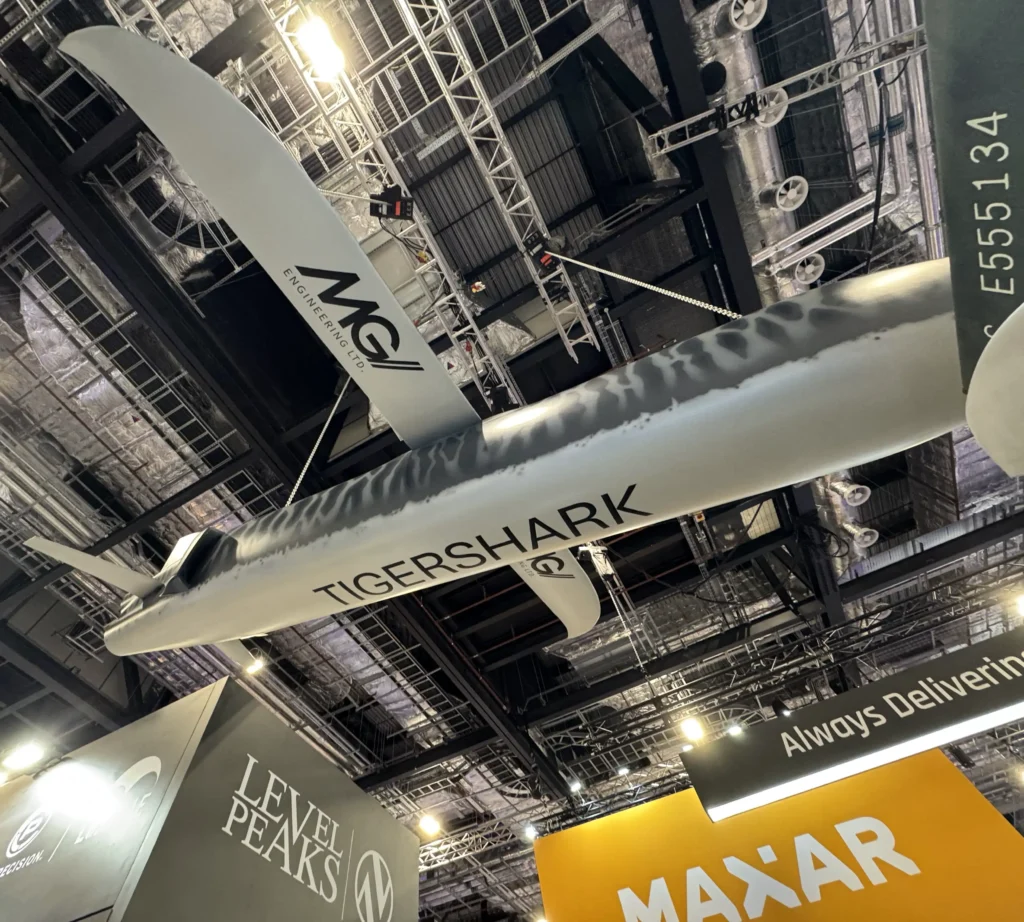
TigerShark is MGI’s larger, higher-performance expendable drone designed for missions where speed, range and payload are operationally decisive.
Its advantages include:
- Extended range for deep or cross-domain operations
- High sub-sonic speed, increasing survivability
- Larger payload envelope, supporting precision effect or specialised sensors
- Resilience to EW interference, enabling operation in heavily contested domains
- Role flexibility, from anti-ship harassment to decoying high-value air defences
Where SkyShark offers mass, TigerShark provides punch—together forming a complementary force mix.
7. Combined Force: The Power of SkyShark + TigerShark
Individually, both drones deliver significant capability. Deployed together, they form a layered expendable ecosystem capable of:
- Conducting ISR and strike in the same operational cycle
- Forcing adversaries to defend on multiple axes
- Saturating radars with mixed-signature targets
- Delivering sequential waves of effect
- Opening corridors for conventional aviation
This modular, scalable approach mirrors modern multi-domain doctrine, giving friendly forces a decisive operational advantage.
Conclusion: Expendable Drones Are Redefining Battlefield Economics
The future battlespace will reward agility, scalability and cost-effective effect. Expendable drones—exemplified by MGI’s SkyShark and TigerShark—provide commanders with a strategically disruptive capability that shifts the balance of power in contested environments.
They enable:
- High-tempo operations
- Acceptable attrition
- Deep reach into denied zones
- Distributed, autonomous effect
- Low-cost precision strike
- Rapid replenishment during conflict
As armed forces worldwide reassess the economics of airpower, expendable drones are emerging as a core enabler of modern doctrine—not as replacements for conventional aviation, but as the decisive complement that unlocks mass, survivability and operational freedom.
MGI’s SkyShark and TigerShark demonstrate how this future can be delivered today: rapid to manufacture, affordable at scale and engineered for the demands of modern high-intensity warfare.
FAQ: Expendable Drones in Modern Military Operations
1. What are expendable drones in military operations?
Expendable drones—also known as attritable UAVs or one-way effectors—are low-cost unmanned aircraft designed for missions where recovery is not required. They allow commanders to project ISR, targeting or precision strike capability without risking high-value assets.
2. Why are expendable drones becoming essential in modern warfare?
Modern conflicts increasingly involve high-threat, contested environments where traditional aircraft face significant risk. Expendable drones provide a cost-effective way to deliver operational effect, enabling nations to sustain high-tempo operations and withstand attrition without strategic loss.
3. What advantages do expendable drones offer over traditional UAVs?
Expendable drones are:
- Cheaper to build and deploy at scale
- More resilient to attrition
- Optimised for deep strikes and contested environments
- Able to saturate and overwhelm air defences
- Capable of operating autonomously without return flight constraints
This makes them ideal for reconnaissance, decoying, and precision effects.
4. What is a one-way effector drone?
A one-way effector drone is an expendable UAV designed to complete a mission in a single flight. Instead of returning to base, it dedicates all available energy and payload to achieving the mission objective—maximising effectiveness, range and manoeuvrability.
5. How are SkyShark and TigerShark used as expendable drones?
SkyShark is a lightweight, agile expendable drone optimised for ISR, EW payloads and low-cost precision effects.
TigerShark is a larger, higher-performance one-way effector designed for deep strike, high-speed approaches and heavier payload delivery.
Used together, they form a scalable capability for multi-axis saturation attacks or layered ISR and strike missions.
6. Are expendable drones effective in contested or GPS-denied environments?
Yes. Expendable drones like SkyShark and TigerShark leverage autonomous guidance, onboard processing and EW-resilient control logic. They are engineered to operate effectively despite jamming, degraded GPS or communications interference—critical for modern high-threat battlespaces.
7. How do expendable drones support cost-effective precision strike?
Traditional long-range strike weapons are expensive and limited in number. Expendable drones provide a low-cost precision alternative, enabling militaries to conduct repeated, accurate strikes without depleting strategic assets or exposing personnel to danger.
8. Can expendable drones be deployed in large numbers?
Yes. Their modular construction and low unit cost allow forces to deploy expendable drones in large coordinated waves. This massed employment can saturate air defence systems, create multiple dilemmas for adversaries and dramatically increase mission success rates.