In contested, remote or infrastructure-poor environments, logistics is often the determining factor between mission success and failure. Maritime supply chains are especially vulnerable: long distances, unpredictable weather, electromagnetic interference, and limited port infrastructure can all delay or compromise critical deliveries. Traditional crewed vessels are effective but costly—and, in increasingly tense geopolitical climates, expose personnel to unnecessary risk.
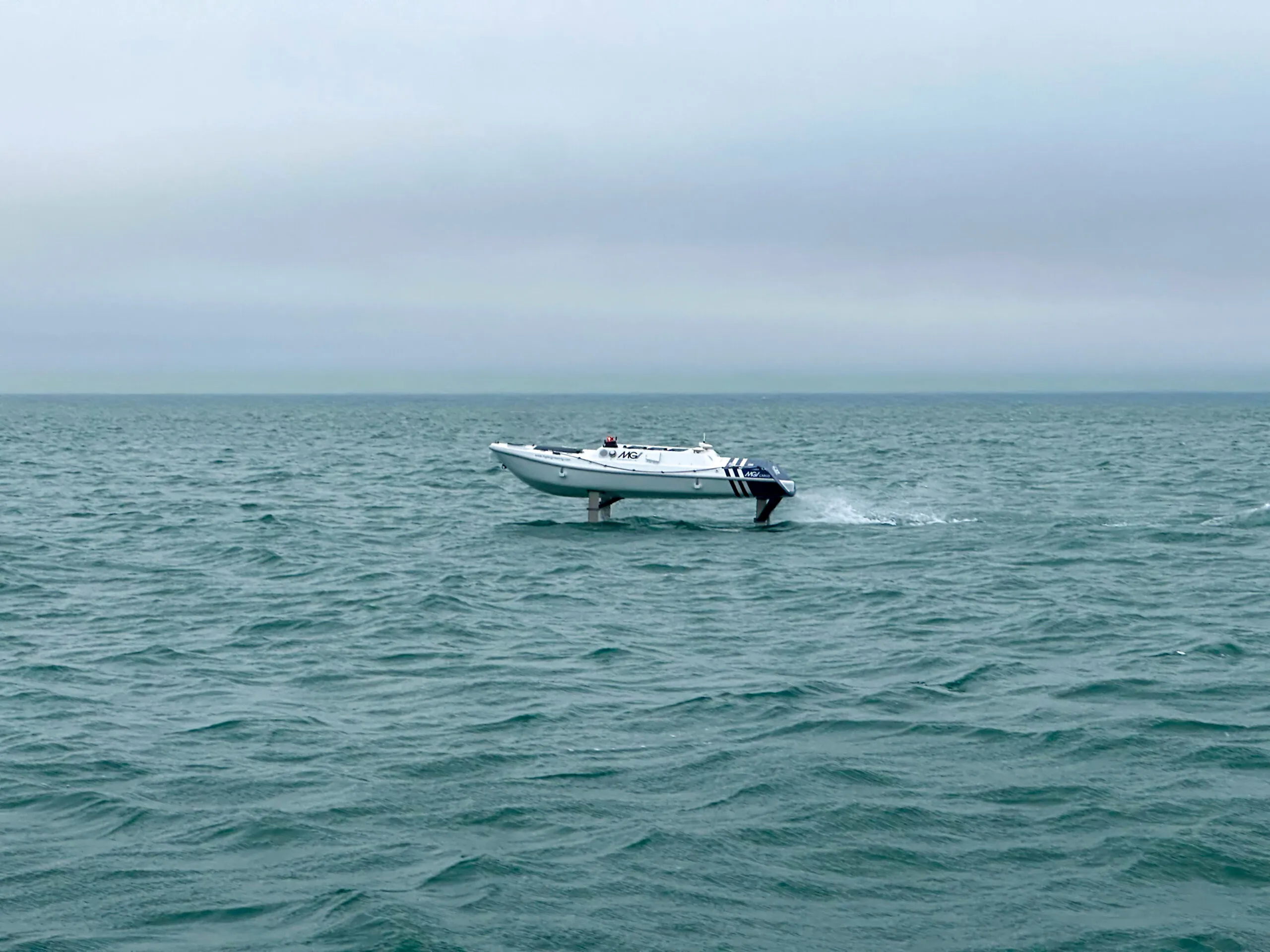
This is where SeaGlide, MGI’s autonomous maritime logistics platform, reshapes what is possible.
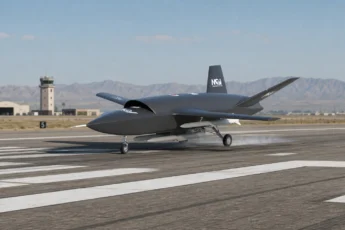
Designed with the same F1-derived engineering methodologies that define MGI’s approach to scalable, low-unit-cost autonomous systems, SeaGlide provides a resilient, modular and highly efficient unmanned surface vessel solution. Crucially, it is paired with MGI’s heavy-lift autonomous UAV platforms, enabling a unique ship-to-shore ecosystem that overcomes one of the biggest challenges in maritime operations: the final metres of delivery.
From long-range resupply for defence operations to safe, reliable logistics for civilian offshore industries, the SeaGlide + UAV combination represents a new blueprint for marine logistics.
The Problem: Why Long-Range Aerial Deliveries Over Water Often Fail
Aerial logistics have advanced rapidly over the past decade, but large-distance over-water flight remains disproportionately challenging. UAV operations across open ocean environments must contend with:
1. Strong, unpredictable winds and weather
Wind gradients over water are more severe and less stable than over land, placing heavy demands on flight control systems.
2. Lack of emergency landing zones
A malfunction requires ditching the aircraft into the sea—resulting in total asset loss and, often, the loss of payload.
3. GNSS degradation and contested signals
Over-water refraction and hostile jamming can degrade positional accuracy. In many contested or denied environments, GPS is unreliable by design.
4. Battery and energy limits
Flying long distances with a meaningful payload consumes significant energy. The heavier the cargo, the less effective a single-hop UAV approach becomes.
The result? High failure rates, low reliability, and limited operational usefulness when UAVs are deployed as the primary long-range delivery method.
This is why MGI Defence developed SeaGlide—not to replace aerial logistics, but to make them viable.
The SeaGlide Solution: Long-Range Autonomy with Exceptional Efficiency
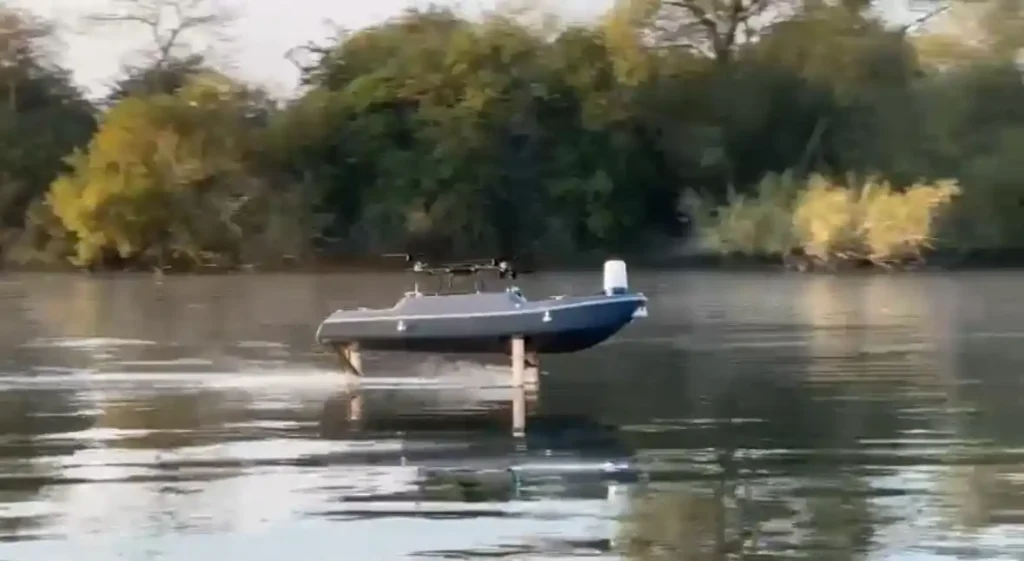
SeaGlide is an autonomous surface vessel designed for extended-range maritime logistics with minimal energy draw and maximum resilience. Instead of expending precious energy fighting altitude, drag and headwinds—as aircraft must—SeaGlide operates at the waterline, where energy costs are significantly lower and endurance dramatically higher.
Key features include:
- High endurance for long-range missions Able to transport supplies over hundreds of kilometres with exceptional efficiency.
- Low-signature operation Ideal for both covert military missions and safe, predictable commercial deliveries.
- Modular payload configurations Supporting everything from equipment and consumables to medical supplies.
- Robust autonomy stack Designed to operate in denied environments, with onboard decision-making, navigational redundancy and no reliance on continuous connectivity.
- Low unit costs through scalable manufacturing Applying MGI’s F1-based lightweight composite technologies and fast-prototyping processes.
In essence, SeaGlide is the workhorse of the maritime resupply chain—delivering reliability at range while reducing risk to personnel and minimising operational cost.
The Missing Link: UAV Final-Lift Delivery for Ship-to-Shore Operations
Even when a vessel reaches a coastline, platform, vessel or austere shoreline, the final delivery stage remains problematic. Sea states, tides and shoreline obstacles often prevent direct approach. Offshore structures such as oil and gas platforms receive high-frequency deliveries, but hoisting cargo from a supply vessel requires:
- crewed intervention
- crane availability
- favourable weather windows
- significant operational safety overhead
This introduces delay, cost, availability constraints and avoidable risk.
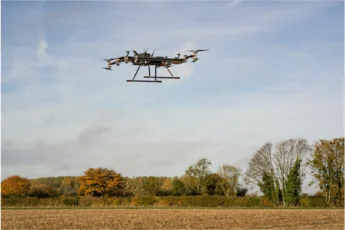
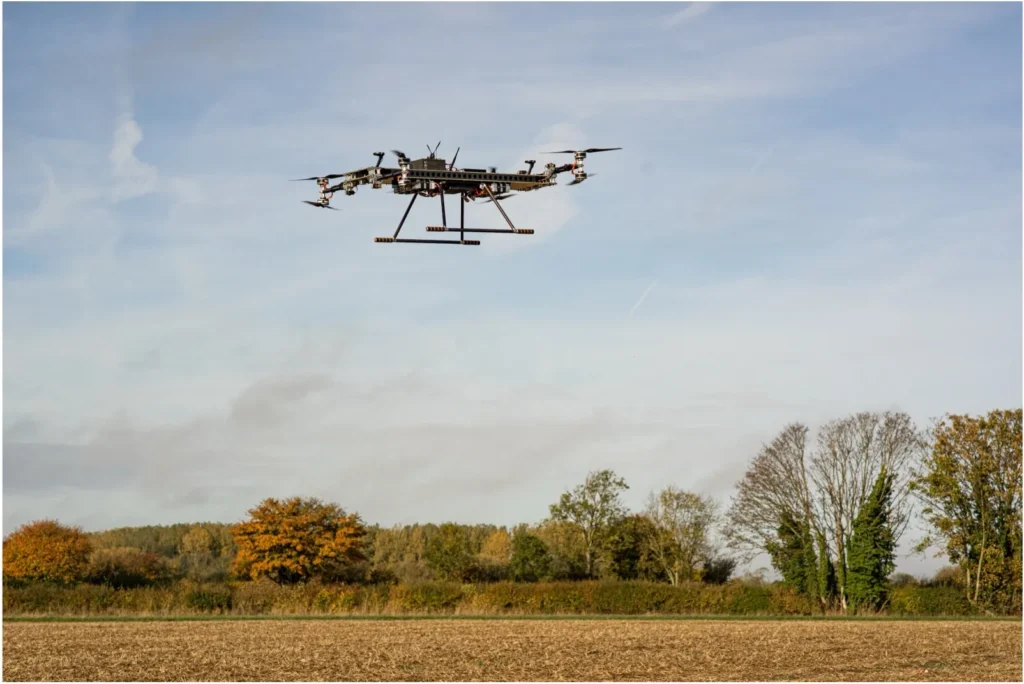
MGI solves this with an integrated system approach: SeaGlide transports the payload to a safe standoff distance, then deploys a heavy-lift UAV to complete the final metres.
Why this hybrid approach works so effectively:
- The UAV handles only the short final leg This avoids long-distance over-water flight, eliminating the primary failure risks.
- Even heavy payloads can be lifted efficiently With SeaGlide carrying the mass across the long-range portion, the UAV is used only for the critical lift and placement.
- Storm-weather resilience is improved SeaGlide selects optimal positioning, allowing the UAV to launch from the most stable micro-environment.
- No need for docking or human intervention Ideal for:
- military resupply along contested shorelines
- humanitarian aid in disaster zones
- offshore wind maintenance teams
- oil & gas platform operators
The result is a flexible, fully autonomous “ship-to-shore” resupply chain—one that is exceptionally reliable even in environments where traditional logistics cannot operate.
Military Applications: Resilient Logistics in Contested Environments
As naval forces shift toward distributed maritime and littoral operations, resilient logistics become mission-critical. SeaGlide enables:
1. Distributed resupply for forward-deployed forces
Small detachments along coastlines or island chains can receive supplies without exposing crewed vessels to surveillance or strike risk.
2. EW-resistant logistics
SeaGlide’s autonomy minimises dependence on vulnerable GNSS signals, enabling operation even under electromagnetic attack.
3. Low-signature covert delivery
Its minimal thermal, acoustic and radar signatures make it ideally suited for contested or denied maritime zones.
4. Minimal-cost attritable logistics
If a vessel is lost, the cost impact is far less than losing a crewed asset—crucial for A2/AD environments.
5. Ship-to-shore resupply under threat
By keeping mother ships well outside enemy detection range, SeaGlide acts as a buffer, shuttling equipment to UAV deployment points.
Together with MGI’s aerial platforms, the solution directly supports the growing doctrinal emphasis on autonomous logistics as a force multiplier.
Civilian Applications: Safe, Efficient Offshore Replenishment
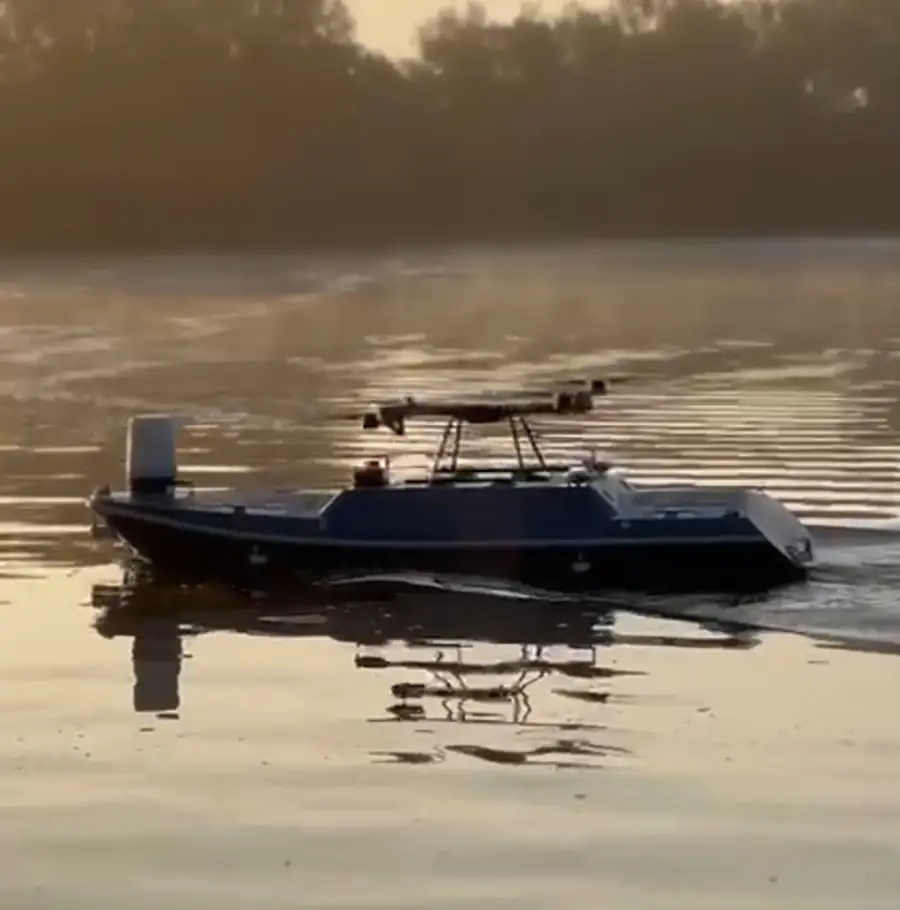
While defence is a core focus, the technology also delivers significant value across offshore industries.
Oil & Gas Platform Support
SeaGlide can transport spare parts, emergency medical packages, testing equipment or consumables to remote rigs without requiring large, crewed resupply vessels.
UAV final delivery eliminates the need for crane scheduling and reduces weather-class dependency.
Offshore Wind Operations
With wind farms expanding further from shore, maintenance teams require more frequent resupply of light components and tools.
SeaGlide + UAV reduces:
- vessel charter costs
- maintenance delays
- downtime when waiting for weather windows
Scientific and Oceanographic Missions
Autonomous oceanographic stations or floating sensor networks can receive replacement modules or sample containers without a crewed expedition.
Emergency Response
Following storms, hurricanes or infrastructure failures, SeaGlide can enter damaged littoral areas where traditional vessels cannot safely operate.
In every case, the hybrid maritime-aerial system enables low-carbon, low-risk, high-frequency logistics that traditional supply vessels simply cannot match.
A System Designed for the Real Challenges of Modern Operations
What sets MGI apart is not just the technology—but the systems thinking behind it.
Most UAV-first delivery concepts fail because they overlook the limitations of long-range aerial operations over water. MGI approaches the problem differently:
- Use the right platform for the right phase of the mission.
- Minimise energy waste.
- Optimise for reliability, not theoretical maximum range.
- Engineer for contested, denied and environmentally harsh conditions.
By combining high-endurance maritime autonomy with precision aerial delivery, MGI delivers a logistics architecture that is:
- more scalable
- more cost-effective
- more resilient to electronic warfare
- more predictable in extreme environments
And, importantly, one that can be rapidly adapted thanks to MGI’s fast-prototyping and iterative engineering model.
Conclusion: The New Standard for Autonomous Marine Logistics
As operational environments evolve—whether in defence, offshore energy or environmental monitoring—the demand for resilient, flexible, low-signature logistics continues to grow. SeaGlide represents a breakthrough capability: an autonomous maritime platform designed for the real constraints of long-distance operations.
When paired with MGI’s heavy-lift UAVs, it becomes more than a vessel. It becomes a complete end-to-end autonomous supply chain, enabling reliable ship-to-shore delivery where traditional systems fall short.
For clients operating in remote waters, contested zones or infrastructure-poor coastlines, this hybrid system offers a decisive advantage: predictable, scalable logistics with minimal risk and maximum autonomy.